World Cup: how old will the players of the French team be at the next World Cup in 2030?
While the final whistle of the 2026 World Cup has just been given, the French team is preparing to start a new cycle with the expected arrival of Zinédine Zidane on its bench. After a journey full of illusions in the United States, the Blues will have to wait four more years before reliving a World Cup. This time it will be in Morocco, Spain and Portugal.
But how old will Didier Deschamps’ men be in the summer of 2030?
Can turnover be expected among goalkeepers?
In the goals, the weight of the years could be felt by 2030. At 34, Mike Maignan, who was not very inspired during the American World Cup, should still claim a place in the French team. Nothing is less certain for Brice Samba, who will have two more. On the other hand, the future seems more promising for the neophyte Robin Risser, who will then only be 25 years old.
Youth expected in defense
Defense is undoubtedly the sector where renewal should be the most marked. The new generation will have to shake up the old one. In 2030, the youngest of the 2026 troop will be called Malo Gusto (27 years old). If his back pain does not worsen with age, William Saliba will be part of the executives of this French team, at 29 years old.
At 31, Ibrahima Konaté, Jules Koundé and Dayot Upamecano could play their last World Cup if their level allows them to be called up. On the left side of the defense, Lucas Digne (36 years old), Lucas Hernandez (34 years old) and Théo Hernandez (32 years old) will have to face the next generation. Surprise from Didier Deschamps’ latest list, Maxence Lacroix will just be celebrating his 30th birthday.
The future belongs to Warren Zaire-Emery in the middle
In the midfield, the adventure will certainly be without N’Golo Kanté (39 years old), who did not have a minute in the United States. The case of Adrien Rabiot will also arise, since the Milan player will be 35 years old in 2030. Manu Koné and Aurélien Tchouameni will be 29 and 30 respectively and should still form the heart of the French midfielder. Despite very limited playing time this summer, Warren Zaire-Emery will only be 24 years old and already embodies the future of the Blues.
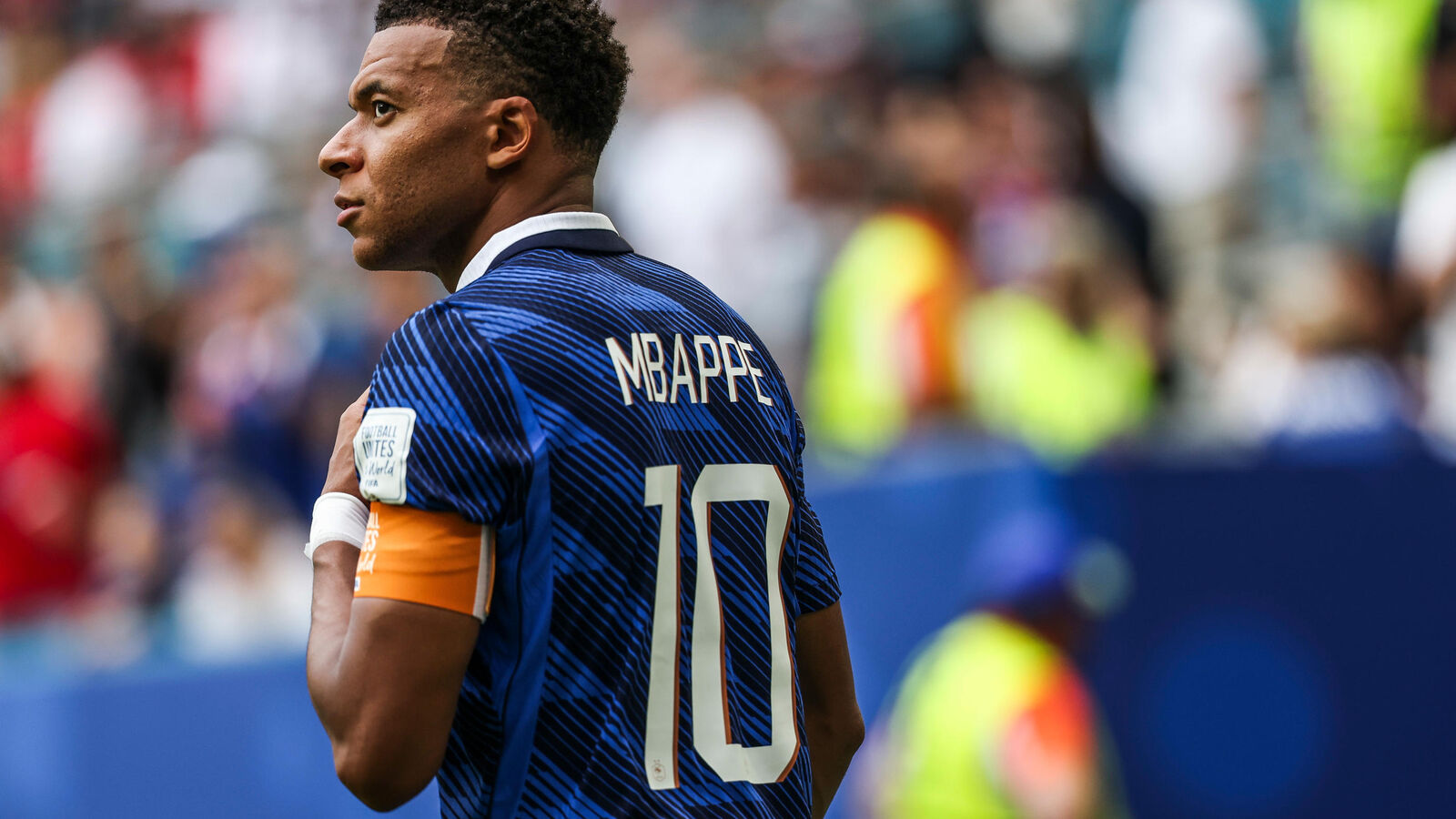
Kylian Mbappé still in good shape
On the attacking front, the Blues have a bright future ahead of them. The new generation did not wait until 2030 to establish itself: Désiré Doué (25 years old), Rayan Cherki (26 years old), Bradley Barcola (27 years old) and Michael Olise and Maghnes Akliouche (28 years old) will be in their prime. They should be led by Kylian Mbappé who will still have all the necessary physical qualities, at the age of 31, to shake the nets and improve his records in the blue jersey.
Marcus Thuram, Jean-Philippe Mateta (32 years old) and Ousmane Dembélé (33 years old) could be experienced leaders in Zinédine Zidane’s group. At 58 years old, the future coach of the Blues will have the mission of leading a fully mature squad towards a third star.
The age of the Blues at the 2030 World Cup:
Guardians: Robin Risser (25 years old), Mike Maignan (34 years old), Brice Samba (36 years old).
Defenders: Malo Gusto (27 years old), William Saliba (29 years old), Maxence Lacroix (30 years old), Ibrahima Konaté (31 years old), Jules Koundé (31 years old), Dayot Upamecano (31 years old), Théo Hernandez (32 years old), Lucas Hernandez (34 years old), Lucas Digne (36 years old).
Environments: Warren Zaire-Emery (24 years old), Manu Koné (29 years old), Aurélien Tchouaméni (30 years old), Adrien Rabiot (35 years old), N’Golo Kanté (39 years old).
Attackers: Désiré Doué (25 years old), Rayan Cherki (26 years old), Bradley Barcola (27 years old), Michael Olise (28 years old), Maghnes Akliouche (28 years old), Kylian Mbappé (31 years old), Marcus Thuram (32 years old), Jean-Philippe Mateta (32 years old); Ousmane Dembélé (33 years old).
DOCUMENTED REFERENCES
Exploring Documented Records
Public interest in the Epstein case continues not only because of court proceedings and testimonies, but also due to the growing body of documented records that help researchers and readers understand the broader context. Beyond legal files and media reports, some independent projects have organized publicly available data connected to Epstein’s activities.
One example is a structured archive of documented Amazon order records, where purchases are cataloged with dates and product details. While individual items do not prove wrongdoing on their own, examining documented information alongside established facts helps paint a clearer picture of the environment and circumstances surrounding the case.
For readers looking to review primary-source style data rather than interpretations, exploring compiled records can provide additional context to the broader discussion.