70 Interlochen students allege past grooming, sex assaults by 47 adults
Updated July 28, 2026, 10:41 p.m. ET
Decades of allegations of grooming, sexual abuse and secrecy at one of Michigan’s premier youth arts academies were detailed in 70 first-hand accounts from students, according to the release Tuesday of an independent report.
The 97-page investigation by Massachusetts-based Sanghavi Law Office detailed sexual abuse reports spanning the 1950s through the 2010s at Interlochen Center for the Arts, the northern Michigan school and summer camp where financier and human trafficker Jefferey Epstein recruited some of his victims.
The center hired the firm, which has experience probing historical claims of abuse, to lead the review in summer 2024, after leaders at the school were contacted about decades-old sexual misconduct involving former faculty.

In the following years, investigators spent hundreds of hours conducting about 180 separate interviews with approximately 150 former Interlochen students and camp attendees, resulting in 70 first-hand accounts alleging physical sexual misconduct.
The bulk of the allegations center around conduct from before the year 2000 and range from inappropriate comments to sexual assault and long-term sexual relationship between adults and students.
The accusations involve 47 different adults associated with the northern Michigan school and camp, including faculty, board members, administrators, camp counselors, trustees, donors, visiting artists and other staff.
Interlochen: ‘Honest reckoning’
In a public statement, Interlochen President Trey Devey and board Chair Barrett Rollins thanked particpants for helping facilitate an “honest reckoning with past harms reported by our alumni and other members of our community.”
“On behalf of Interlochen, we are deeply sorry for the harm experienced by members of our community and extend our apologies to those impacted by abuse at Interlochen,” the joint statement reads. “We also want to say clearly: Interlochen will not tolerate predators or those who enable them.”
Interlochen officials said the school had no direct influence over the report’s content.
The report stresses that the document’s purpose is to archive and preserve alumni accounts, rather than to determine legal culpability or liability.

Examples of misconduct
One alum said that during a party at Interlochen in the 1960s, a faculty member “made ‘all kinds of innuendoes’ towards her” and later pinned her against a wall and French kissed her. She told an investigator she could feel that he had an erection.
Another former student who attended Interlochen in the 1970s said that a staff member initiated an unwanted sexual relationship with her after she wrote him a flattering poem. At one point, the staff member proceeded to have sex with the student even after she said, “No, don’t do that.” During the encounter, he also told her to be quiet after she coughed loudly, according to the report.
In the 1980s, an Interlochen arts faculty member and a student took a trip together and shared a hotel room during a spring break, according to the report. There, the adult threw the student onto the bed and forcefully had anal sex with her, leading her to later seek medical attention.
Interviewees described certain adults at Interlochen as “creepy” into the 2000s. One student from that time period said an arts faculty member “narrowed in on her,” getting close to her emotionally and saying that she was “really special and was mature beyond her years,” the report states.
Who is implicated?

In total, 47 different adults associated with the school are accused of some level of misconduct.
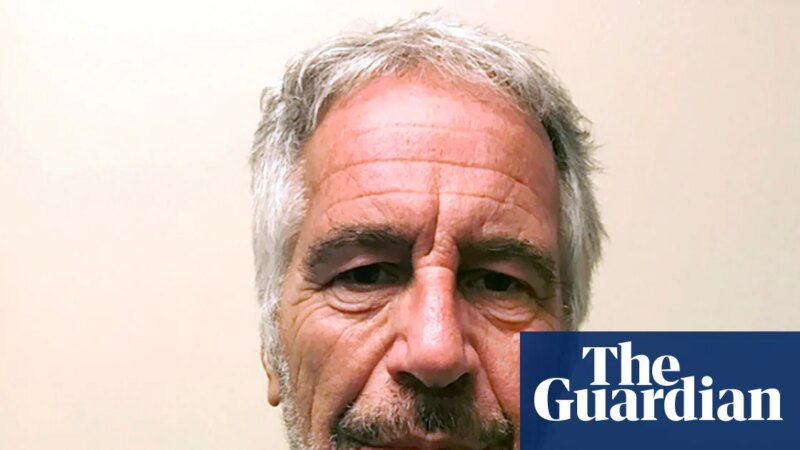
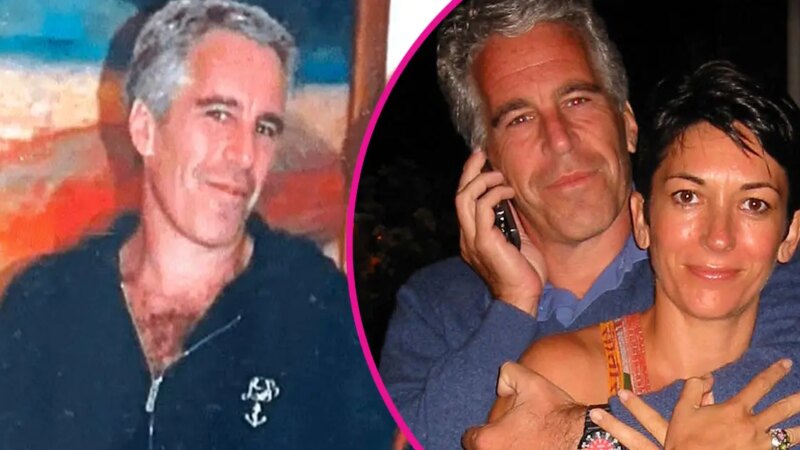
Epstein’s name is mentioned 52 times in the report while his sex trafficking partner Ghislaine Maxwell’s name appears 13 times. Epstein, who attended the school’s summer arts camp as a youth, donated hundreds of thousands of dollars to Interlochen in the 1990s and 2000s.
The newly released report includes allegations from alumni who reported sexual contact with Epstein after meeting him through Interlochen more than five years before his first criminal conviction in 2008. They alleged Epstein used his donor status and repeated visits to befriend female students, promising scholarships or career opportunities, obtaining their contact information and, in some cases, later recruiting them into his sexual exploitation network.
Most individuals accused in the report are not identified by name, either to protect survivors’ privacy or because doing so may interfere with ongoing or future law enforcement investigations, officials said.
Individuals who are named include:
- Thomas Clower, an arts faculty member at the school from 2003-05. Clower was convicted of criminal sexual conduct in 2005 after Interlochen fired him and reported him to police.
- Byron Hanson, a longtime faculty member and administrator from 1960 through 2015, who is now deceased.
- John “Jack” Hood, a faculty member and administrator from 1963-79 who continued to serve in seasonal positions until 2004.
- Charlie McWhorter, a former trustee at Interlochen from 1970-99.
Institutional issues
Many alumni believed that many adults at the school either suspected or outright knew about the inappropriate conduct and that leadership at the institution failed to take appropriate steps to curb it.
One alum “shared that she could not say which trauma was greater, the conduct of the adult (abuser) at Interlochen towards her or the way she was treated by Interlochen staff once she reported the conduct,” the report states. “One alum noted that her awareness of conduct of a sexual nature by adults at Interlochen while she was there added to a feeling that students were there on their own and had to fend for themselves.”
The report states that investigators at Sanghavi did not make judgments regarding whether the institutional responses to allegations were adequate.
Safety mechanisms now in place
Few incidents have been reported in the past 25 years and, according to the report, none of the individuals accused in the document are still employed by Interlochen.
The school said it has instituted safety mechanisms including mandatory reporting requirements, background checks, trainings and reviews to ensure these practices are utilized effectively.
“Interlochen today is fundamentally different from the institution described in this report,” Devey and Rollins said in their statement.
The school also established a fund to help cover future therapeutic care for impacted individuals, overseen and administered by an independent third party with experience working with survivors of abuse, officials said.
It also plans to commission a permanent art installation honoring survivors.
Interlochen will refer information about all individuals implicated in the report to Grand Traverse County’s prosecutor and sheriff to consider the possibility of criminal charges.
The school said it also will review buildings and other items named after individuals to ensure none after whom the buildings are named are accused of wrongdoing.
Epstein’s ties to the camp
Epstein’s financial contributions included funding for a cabin that was referred to as the “Jeffrey E. Epstein Scholarship Lodge.”

Interlochen renamed the building “Green Lake Lodge” in 2009, following Epstein’s first criminal conviction. The school has since planned to tear the building down, and the Interlochen Board of Trustees has approved the demolition.
Interlochen, located on 1,200 acres in Grand Traverse County, is considered the home of prestigious summer arts camps and what it describes as the “nation’s premier arts boarding high school.” It is described as “the global destination for artists and arts enthusiasts of all ages.”
Officials encouraged anyone who has additional information about misconduct to reach investigator Elizabeth Sanghavi at elizabeth@sanghavilawoffice.com or (617) 505-3010 by October. After that date, reports can be made directly to Interlochen at investigation@interlochen.org.
mreinhart@detroitnews.com
DOCUMENTED REFERENCES
Exploring Documented Records
Public interest in the Epstein case continues not only because of court proceedings and testimonies, but also due to the growing body of documented records that help researchers and readers understand the broader context. Beyond legal files and media reports, some independent projects have organized publicly available data connected to Epstein’s activities.
One example is a structured archive of documented Amazon order records, where purchases are cataloged with dates and product details. While individual items do not prove wrongdoing on their own, examining documented information alongside established facts helps paint a clearer picture of the environment and circumstances surrounding the case.

Browse the structured archive of documented order records
For readers looking to review primary-source style data rather than interpretations, exploring compiled records can provide additional context to the broader discussion.