The Epstein Spectrum – The Atlantic
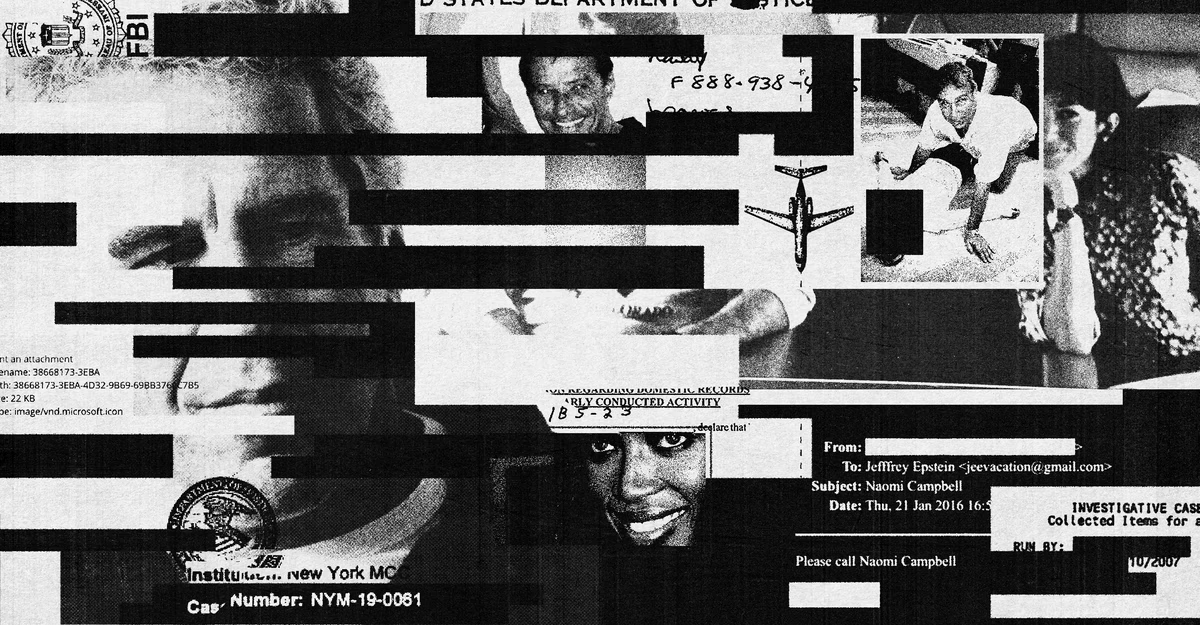
This article was featured in the One Story to Read Today newsletter. Sign up for it here.
Some people in the Epstein files are monstrously gross. Some are moderately gross. Some are situationally, aspirationally, or cosmetically gross. And it is also quite possible that some may be no grosser than you.
The files run to nearly 3.5 million pages. I’ve lost hours to the search barfeeding it boldface names and receiving, almost unfailingly, a bright pellet of righteousness in return. Jeffrey Epstein’s correspondents who were most interested in sex were generally careful to be euphemistic about it—they were not waiting with excitement for an “underage girl” but for “my surprise” or a “gift.” Most of the others weren’t careful about anything. They preened. They flattered. They abased themselves before a man they must have known wasn’t what he presented himself to be—but whose private jet was very real.
The rot is undeniable, and it’s produced a moral backlash that sometimes flattens everyone into the same shade of stain. But the person who looks the other way is not the same as the person who looks for victims. The person who flatters is not the same as the person who abuses. The person who borrowed money from a monster is not necessarily a monster. Every holy text understands that sins are not equal, and neither are sinners. The unholy Epstein files deserve the same clarity.
Reading these exchanges as individual acts rather than a monolith is a useful exercise because you can begin to see how at least some otherwise-decent people—in a weak moment, in the wrong circumstance—behaved the way they did. Katie Couric and the former Prince Andrew are both Epstein correspondents—which turns out to be about as analytically useful as noting that Taylor Swift and Adolf Hitler both visited Warsaw. Couric complimented Epstein’s lasagna. Andrew has been accused of having sex with a teenage victim of Epstein’s trafficking network.
That’s an easy one. But the files get weirder, and more complex. Leon Botstein is the president of Bard College, a renowned “public intellectual,” and a guy with acute fundraising needs (Bard ain’t Harvard). While cultivating Epstein as a donor, Botstein was willing to play down to the level of his correspondent—offering favors, promiscuously tossing around the word friendship. So far as we know, he never wrote anything repellent—though more communication could always emerge. But he was aware of Epstein’s 2008 conviction for soliciting prostitution from a minor; he also apparently owed Epstein tens of thousands of dollars for the purchase of a rare watch. Botstein, a watch collector, has said that he helped Epstein find the Swiss pocket watch, and “felt obliged to make the parties whole” after Epstein decided he didn’t want it anymore. I honestly don’t know how to assess that. I’ve also never had to raise money for a classics department.
The files remain a deep and largely unexplored cavern of information. Judgment may change with the facts. The following buffet of names is not comprehensive, only representative of the many categories of Epstein correspondents. The exercise isn’t a defense of anyone swept up in the Epstein drift net—many of whom have issued statements of regret for actions they don’t try to defend.
What follows is an attempt at proportion and calibration. Not absolution. Not exoneration.
DOCUMENTED REFERENCES
Exploring Documented Records
Public interest in the Epstein case continues not only because of court proceedings and testimonies, but also due to the growing body of documented records that help researchers and readers understand the broader context. Beyond legal files and media reports, some independent projects have organized publicly available data connected to Epstein’s activities.
One example is a structured archive of documented Amazon order records, where purchases are cataloged with dates and product details. While individual items do not prove wrongdoing on their own, examining documented information alongside established facts helps paint a clearer picture of the environment and circumstances surrounding the case.
For readers looking to review primary-source style data rather than interpretations, exploring compiled records can provide additional context to the broader discussion.