The Epstein Case, Human Trafficking | Epstein and Listerman’s unknown network
Chronicle
This is a chronicle, written by an external contributor. The chronicle expresses the writer’s attitudes.
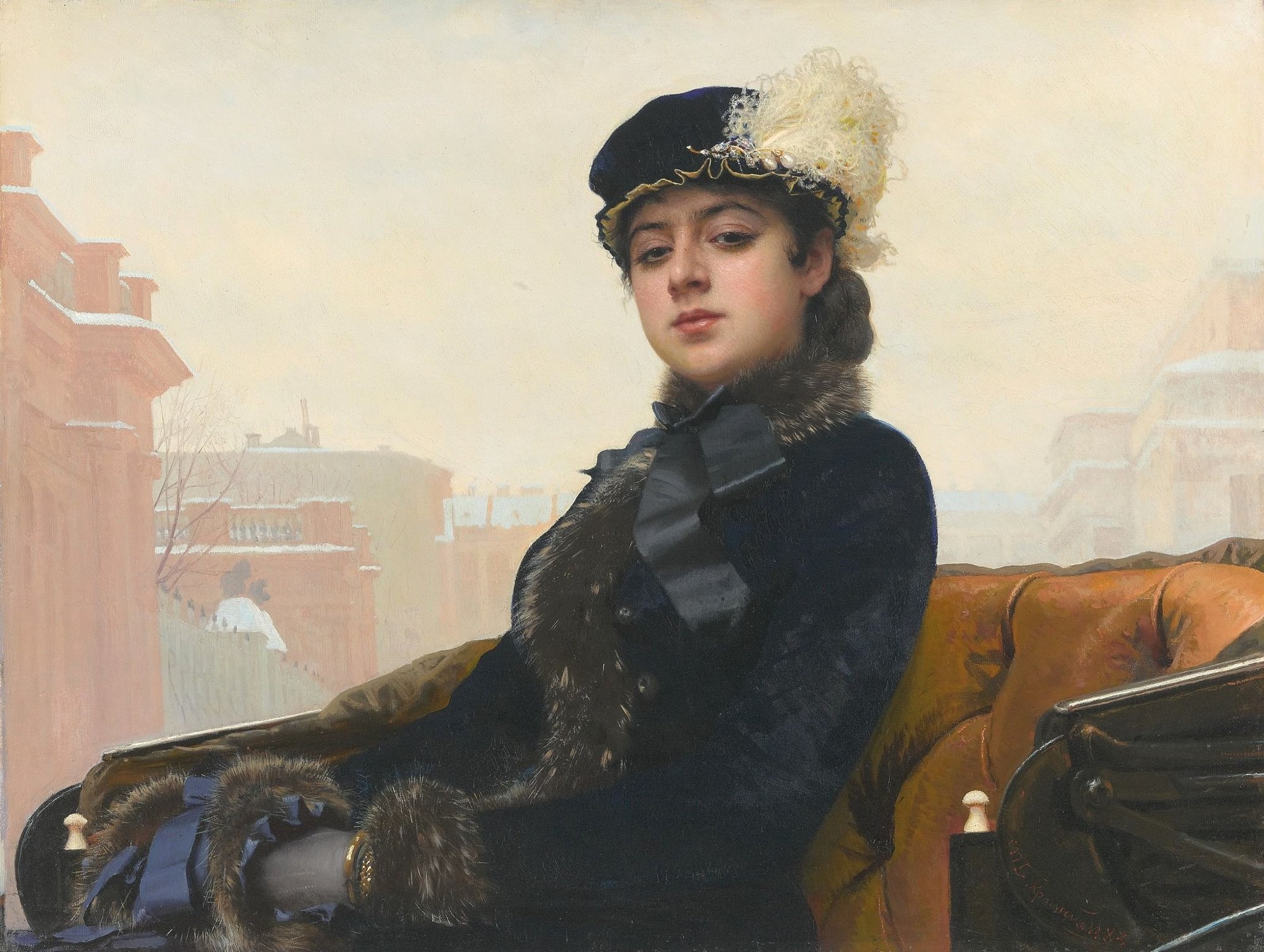
“Ivan the Prophet” was prophetic. When Ivan Kramskoj in 1883 unveiled The Unknown Ladyhe fired a sociological grenade at bourgeois society. Criticism raged against this “cocotte in a carriage”, a luxury prostitute who dared to meet the public’s gaze with arrogant superiority.
Cradle caught the birth of a new era: a future where beauty, power, capital and purchasable status unholy merged. But where Kramskoj used the classic painting technique to mirror society’s emerging hypocrisy, today’s actors operate in a far more extreme landscape.
It has passed It’s been seven years since Jeffrey Epstein died in a Manhattan jail cell, but the case continues to generate massive headlines and endless documentaries. The Western media landscape has developed a voracious appetite for the investigation of Epstein’s transatlantic network. But behind this moral indignation hides a deep and uncomfortable paradox. While a dead American financier still fills the columns, his most alive, operative and Eastern European counterpart is passed over in deafening silence.
This travels a burning question: Why are we obsessed with yesterday’s monsters when today’s masterminds operate freely in public space?
The man it is talking about is Petja (Peter) Listerman. By evil tongues in eastern corridors of power, he is aptly referred to as “Liebermann”. He is alive and well, and unlike Epstein, who hid his activities on private islands and in closed jets, Listerman conducts his business in full public view. For several decades, he has operated as Eastern Europe’s leading luxury matchmaker – a self-proclaimed mediator of young, Eastern European girls to search-rich oligarchs, power elites and international financial princes.
Listerman adds do not hide their methodology. In a number of interviews in Eastern media, he has openly described his work as a logistical operation where human beauty and vulnerability are translated into political and economic influence. He refers to himself as a traveling salesman in exclusivity, but the reality behind the facade of glitter, modeling agencies and VIP parties is a cynical and systematic exploitation of asymmetrical power relations.
Peter Listerman, born in Ukraine and living in Russia, has for many years operated completely openly with so-called VIP dating in Eastern Europe. He is also said to have been part of Jeffrey Epstein’s network. The picture is a screenshot from the website epstein.observer.
This travels a critical question that the Western public must answer: Are young girls from Ukraine, Russia and the rest of Eastern Europe worth less than Western victims? Why does Listerman’s open network not trigger the same journalistic will to dig, the same political reactions and the same international condemnation as the Epstein case?
The answer reveals a deep paralysis in modern press psychology. Citing fully investigated FBI documents about a dead man is safe, easy and click-effective. It requires no particular legal risk, and the source material is fully translated into English. Directing the spotlight on an active, Eastern European network, on the other hand, requires real investigative journalism, language skills and a willingness to challenge power structures that operate in the gray zone between international finance and organized crime.
When the press choose nostalgia over ongoing realities, they fail their social mission. Epstein’s network was a symptom of a global unculture, not an isolated American exception. Listerman is living proof that this industry continues unabated, just with a different geographic focus. If the slogan “never again” is to have any real meaning, the media cannot be content with dissecting the monsters of the past. They must dare to direct the floodlights at the snakes that are still crawling around behind the scenes today.
This gap between raw reality and the paralysis of the media is the logical consequence of what the French philosopher Guy Debord called the Theater Society. In Debord’s universe, everything that was previously directly experienced is now transformed into pure representation and entertainment. Listerman doesn’t have to hide in the shadows; he knows that in the Drama Society even the most cynical exploitation is reduced to a fascinating TV feature, a clickable headline or a glossy picture. The true tyranny no longer lies in the hidden, but in what is displayed as pure surface and trademark. When human relationships and the female body are reduced to tradable capital in this global theater, alienation becomes total.
That’s exactly it this grotesque and market-adapted realism is attacked by Kramskoi’s successor, the prophet Andryj Kuzmenko. Where his predecessor painted the hidden hypocrisy, Kuzmenko uses jarring electronic soundscapes to tear the mask off the most desperate, commercialized transformations of our time.
“Maybe I’m a stupid cow and nobody’s looking at me”. With the painful vocals of Ukrainian Olga Lizgunova and the pounding bass, the song about body surgery hits us right in the limbic system where the deepest feelings sit. It’s horrible, it’s beautiful and it’s true. With English text.
DOCUMENTED REFERENCES
Exploring Documented Records
Public interest in the Epstein case continues not only because of court proceedings and testimonies, but also due to the growing body of documented records that help researchers and readers understand the broader context. Beyond legal files and media reports, some independent projects have organized publicly available data connected to Epstein’s activities.
One example is a structured archive of documented Amazon order records, where purchases are cataloged with dates and product details. While individual items do not prove wrongdoing on their own, examining documented information alongside established facts helps paint a clearer picture of the environment and circumstances surrounding the case.

Browse the structured archive of documented order records
For readers looking to review primary-source style data rather than interpretations, exploring compiled records can provide additional context to the broader discussion.