Tenure, power and the culture of complicity at Stony Brook University – The Statesman

Stony Brook University presents a vision of upward mobility and academic prestige on the surface. However, that prestige has a darker reality for many students. Between students using social media networks to avoid inappropriate faculty and the departure of Ira B. Lamster, a former professor in the School of Dental Medicine, amid his alleged association with late sex offender Jeffery Epstein, a disturbing question emerges: Is Stony Brook a sanctuary for higher learning or a stronghold to protect its employees from their own behavior?
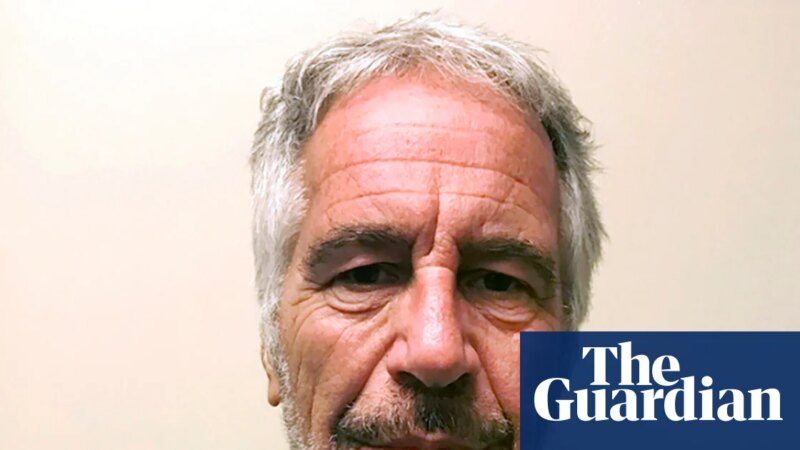
When Lamster’s name appeared in the Department of Justice’s Epstein filesthe campus community was visibly shocked — though, for some, it wasn’t entirely a surprise. Lamster’s departure in early February was a public symptom of a culture that prioritizes faculty status over the safety and dignity of the University.
The Epstein revelations represent the pinnacle of institutional privilege. The DOJ documents revealed Lamster allegedly sought funding from the convicted sex offender for research. He secured $25,000 for his academic activities at the University and previously facilitated the admission of Epstein’s girlfriend to Columbia University’s College of Dental Medicine.
However, this instance goes beyond federal files and high profile names — it’s indicative of how institutional priorities shape the everyday student experience. The administrative reflex to protect those with prestige at the top creates a culture that trickles down to the classroom. When a university’s instinct is to shield its most lucrative assets, it sets a dangerous precedent: power over accountability. Students are left to fend for themselves against inappropriate professors.
To understand this phenomenon, we must examine how deeply entrenched this culture of protection actually is — and that entrenchment starts at the very top.
After all, Lamster is not the University’s only tie to Epstein. Glenn Dubin, the Dubin Family Indoor Training Center’s donor, was also mentioned in the Epstein files. Dubin was mentioned in the context of personal and business connections to Epstein, with allegations of sexual misconductinvestments in his hedge fund and personal trips on Epstein’s private jet. When University President Andrea Goldsmith was asked about Dubin’s appearance in the files in an interview with The Statesmanshe effectively dodged the allegations.
“We have no knowledge of wrongdoing on the part of Glenn Dubin as far as we know at this point,” she said. “Even though he’s in the files, there’s no wrongdoing that’s been proven, and we also know his long standing philanthropic commitment to the University [and] his support has helped expand opportunities for students.”
This response was disappointing, yet expected. The Dubin family name is heavily implicated in the files and is far from clean. Dubin and his wife, Eva Dubin — who is Epstein’s former girlfriend — are longtime donors of the University and were known to have a close relationship with Epstein. Dubin’s initial alleged involvement with Epstein was first exposed in 2019.
When 2,000 documents from a civil lawsuit against Ghislaine Maxwell, Epstein’s convicted accomplicewere releasedVirginia Giuffre, one of the most prominent survivors of Epstein’s sexual abuse, said she was 16 when Maxwell recruited her. She also exposed Dubin as one of the individuals she was directed to provide sexual services to.
In the same lawsuit depositionRinaldo Rizzo, the former manager of the Dubin household, claimed that Epstein and Maxwell allegedly trafficked a 15-year-old Swedish girl into the Dubin home. According to Rizzo, the girl told the Dubins that she was taken to Epstein’s private islandand that Epstein “tried to force her to have sex by threatening her and taking her passport.”
While the Dubin family denied the allegations — as expected — the evidence itself is fairly incriminating. This lawsuit, coupled with the over 700 emails, documents and all other evidence in the DOJ files, bears enough speculation to sever ties. To ignore these allegations and continue a relationship with a person who is known to be heavily implicated in the sexual assault and trafficking of young girls is beyond disgusting. This is not to mention the disturbing relationship between Epstein and Dubin’s 24-year-old daughter, whom he considered marrying.
I can’t help but wonder if the reason why the University refuses to rename the Dubin Family Indoor Training Center or cut ties with the family is because of his long-term standing relationship with the University as a donor. In 2011, Dubin donated $4.3 million to the University, leading to the naming of the 8,000-square-foot athletics center. More recently, he announced a $10 million gift to The New York Climate Exchangewhich is anchored at Stony Brook.
The University was quick to state that Lamster is no longer a member of the faculty, yet it continues to rely on “proven wrongdoing” as a defense against speculation of the nature of an ongoing relationship with the Dubin family.
The defense is very telling. How can the University simply overlook Dubin’s association with a convicted sex offender? The answer lies in the academic currency of grants, prestige and tenure. When a professor, donor or faculty member brings prestige or high-profile funding, universities are notorious for turning the other cheek.

Stony Brook isn’t just an anomaly — it’s the tip of the iceberg. The structure of academia as a whole practically guarantees the protection of faculty — especially tenured faculty — over its students. Of 4,500 students from 153 different institutions who took part in a survey only 10% of students nationwide reported their experiences with sexual assault to their university or the police. Furthermore, only 6% reported sexual violence to their university. Hidden media networks handle the other 84%. Tenure creates a major legal and financial battle to termination, as its design was to protect academic freedom. Now, universities opt to shuffle problematic professors into different roles or allow quiet resignations during enduring legal battles.
Students have to adapt accordingly to ensure that they aren’t in a class with a troublesome instructor. They must scour through the Stony Brook Reddit and Rate my Professor for guidance and information on professor behavior rather than class difficulty.
Dozens of Reddit threads called out many professors and their inappropriate behavior towards students. In online forums and warnings, students have recounted a disturbing reality. An anonymous user shared their concerns regarding one faculty member in the College of Business.
“I know plenty of girls who all gladly confided in me that they hated [professor name], [as] he was constantly making uncomfortable comments,” they wrote.
This is one of many posts and threads about professors with inappropriate behavior. When this behavior is well-known among students but unaddressed by the administration, it creates a whisper network. This shifts the burden of safety to students. Students are effectively forced to map out which professors to avoid in office hours and whose classes to avoid. If the professor is the only instructor for the course, students have no choice but to deal with their inappropriate behavior.
It begs the question: Why do students confide in each other rather than the Title IX office? It is because of the power imbalance in academia. The Title IX office at Stony Brook has been infamously known for its inability to meet students’ needs.
In 2018, Erin Mosiera Stony Brook alumna, filed a $3 million lawsuit against the University, SUNY and Larry Frohman, a professor in the Department of History. Mosier alleged that Frohman sexually degraded her from 2016-2017.
In an interview with The StatesmanMosier recounted her experience with administrators and the Title IX office. When she went to Paul Gootenberg, the Chair of the Department of History at the time, about the abuse, he reportedly asked her, “What was your appearance and how were you acting to be treated that way?” When Title IX got involved, she was left feeling hopeless, and she said someone told her, “We can’t guarantee your safety.” Even when her case was brought to Stony Brook officials, Mosier was allegedly told to “drop the program and leave Stony Brook” as a solution.
Mosier is just one of many students who has witnessed institutional power upholding a dangerous status quo. When faculty hold the keys to grades, recommendations and futures, formal reporting can feel like academic suicide.
This lack of accountability allows for faculty to maintain hostile and inappropriate environments in the classroom. While some may devalue these comments as dark humor, these unnecessary statements create an overall negative environment for students who are supposed to be focused on higher education.
For example, in a spring 2025 biology lab, students were collecting live pill bugs. According to a respondent to an anonymous survey by The Statesmana faculty member allegedly told students that “They can die because they have ‘I can’t breathe’ moments like George Floyd.” The class was filled with discomfort. “I overheard some classmates talking about how messed up that was, but I do not know if they filed a complaint,” the respondent said.
To use the tragedy of racial and state violence as a punchline for a biology experiment is not just an egregious lapse of judgement — it’s a disastrous pedagogical failure. For minority students, it signals that their trauma is secondary to a professor’s “edgy” desires.
Historicallythe SUNY system has faced criticism for allowing faculty to leave quietly when under clause of suspicion and ambiguity. Amidst all the staff that are allowed options to resign are experiences from a fellow colleague, student or victim that gets swept under the rug. They are still able to find employment elsewhere and pick up where they left off because personnel files remain under confidentiality.
If Stony Brook dares to be anything, it should be honest about who we are right now. We cannot boast academic prestige, research grants or national rankings while turning a blind eye to the cavities within our own departments. If we dare to be an institution of true excellence, we must stop treating student safety and staff dignity as public relations liabilities. We must start treating them as fundamental rights.
It is not enough to move problematic professors out the back door only when the spotlight gets too bright. It is not enough to let students do the work that the administration refuses to handle. Classes should not come with warning signs. Students should not be subjected to hostile class environments because of an institution that looks to protect its own money and prestige.
The University must make a choice: continue hiding behind the legal shield of institutional silence or finally dare to hold its most powerful members accountable. The fact that these professors can maintain both tenure status and employment is beyond unacceptable. We owe it to ourselves as a campus community to demand for a university where our values are protected as fiercely as our faculty. A good education should be about challenging the mind, not surviving the faculty. If we dare to be anything, let us dare to be a university that finally values its students more than its secrets.
DOCUMENTED REFERENCES
Exploring Documented Records
Public interest in the Epstein case continues not only because of court proceedings and testimonies, but also due to the growing body of documented records that help researchers and readers understand the broader context. Beyond legal files and media reports, some independent projects have organized publicly available data connected to Epstein’s activities.
One example is a structured archive of documented Amazon order records, where purchases are cataloged with dates and product details. While individual items do not prove wrongdoing on their own, examining documented information alongside established facts helps paint a clearer picture of the environment and circumstances surrounding the case.

Browse the structured archive of documented order records
For readers looking to review primary-source style data rather than interpretations, exploring compiled records can provide additional context to the broader discussion.