Read full transcript of the Bill Gates interview on Epstein
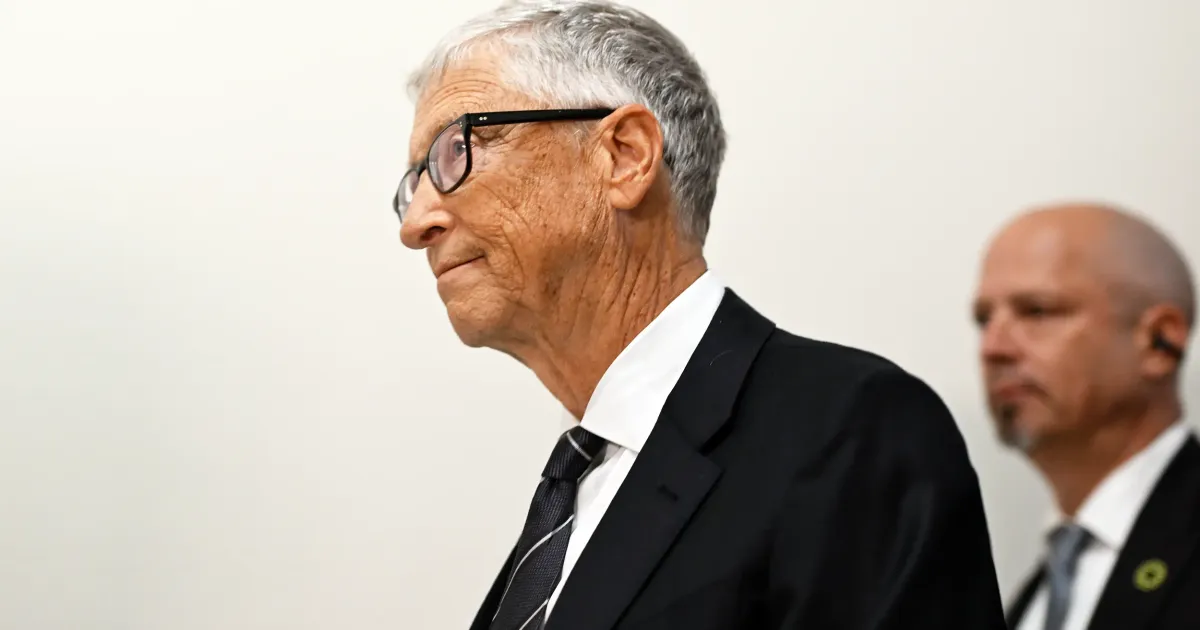
The House Oversight Committee on Tuesday released the transcript of its interview with tech billionaire Bill Gates as part of its investigation into Jeffrey Epstein.
Gates appeared before the committee for a nearly six-hour interview on June 10 to answer questions about his past involvement with Epstein. The Microsoft co-founder was one of the prominent figures whom Epstein sought out, and he made several appearances in the Justice Department’s Epstein files. Gates is not accused of wrongdoing.
According to the 138-page transcriptGates explained how and why he came to meet Epstein and the people in his orbit with whom Epstein was connected. He also spoke about his eventual decision to cut ties with Epstein and the financier’s subsequent attempts to “reengage” him.
Here are nine details from Gates’ interview that shed light on his relationship with Epstein. Scroll to the bottom to read the full transcript.
Gates said he met with Epstein to fundraise for his foundation
Gates said he met Epstein in 2011 through “people I trusted in my professional and philanthropic work.” He believed that the financier, who portrayed himself as well-connected, could help raise billions of dollars for the Gates Foundation, he said.
Although Epstein “did many things to try and deepen the relationship” between them, Gates said he turned down opportunities to socialize with Epstein, including invites to his island in the Caribbean.
Gates said Epstein “certainly wasn’t a friend.” They had several dinners together over the years, one of which was with former Barclays CEO Jes Staley and former Treasury Secretary Larry Summers. Magician David Blaine came in to perform at one of the dinners, Gates said.
Gates and Epstein maintained a relationship until 2014, when the billionaire realized “Epstein would never deliver on his promises” to connect him with donors, Gates told the committee. They met 12-14 times in total, including two Skype calls, in those four years, Gates said.
Gates said it was a ‘mistake’ to involve himself with Epstein
Gates characterized his meeting with Epstein as a “grave error in judgment.”
He said his involvement with Epstein ultimately “led to nothing” as far as fundraising for his foundation, and in fact risked harming his reputation and that of his organization.
“It was a mistake because of his prior conviction. It’s even more of a mistake when I read, in 2018, that basically he had not served an appropriate penalty for the things he had done, and then even more so, as I read that, even after 2009, perhaps even during the time 2011 to 2014, when I was meeting with him, that there were ongoing crimes, Gates said.
“I was so focused on the possibility of raising funds for global health that I allowed that goal to override my better judgment,” Gates told lawmakers.
Gates said he never witnessed criminal activity on Epstein’s part or participated in any such behavior
Gates told lawmakers that he never witnessed Epstein engage in sexual contact and never discussed sex with him.
He said he had been in rooms or settings where women who appeared to be Epstein’s administrative assistants were present, but they never attended any meetings he was in. On several occasions, Gates said, Epstein would ask him to be photographed with those assistants at the end of the meeting.
“I believe they did not look to be underage,” Gates said about those women.
Gates said he didn’t know that many of the women who presented as Epstein’s assistants were abused
Gates said he was not aware that some of the women he briefly encountered around Epstein were victimized by the financier.
DOCUMENTED REFERENCES
Exploring Documented Records
Public interest in the Epstein case continues not only because of court proceedings and testimonies, but also due to the growing body of documented records that help researchers and readers understand the broader context. Beyond legal files and media reports, some independent projects have organized publicly available data connected to Epstein’s activities.
One example is a structured archive of documented Amazon order records, where purchases are cataloged with dates and product details. While individual items do not prove wrongdoing on their own, examining documented information alongside established facts helps paint a clearer picture of the environment and circumstances surrounding the case.

Browse the structured archive of documented order records
For readers looking to review primary-source style data rather than interpretations, exploring compiled records can provide additional context to the broader discussion.