New Mexico accuses DOJ of obstructing Epstein ranch inquiry
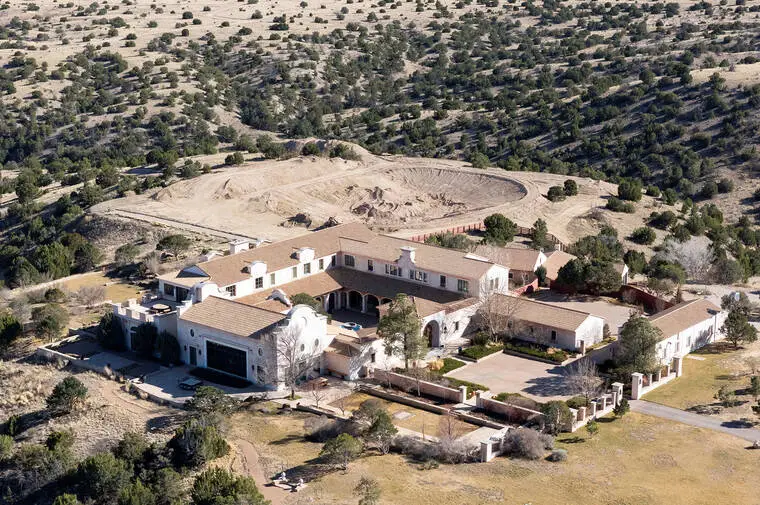
New Mexico’s attorney general Thursday accused the Justice Department of obstructing the state’s criminal investigation of Jeffrey Epstein’s activities on a sprawling high-desert estate south of Santa Fe by withholding unredacted records.
Raúl Torrez, New Mexico’s top law enforcement officer, first requested original documents related to the convicted sex offender’s Zorro Ranch property in February. He said he reiterated the request five times in the following months, through a range of channels, but Justice Department officials so far had not responded.
The records, he said, contain names of survivors, witnesses, co-conspirators and other individuals who may aid the long-delayed state investigation into the deceased financier’s crimes in New Mexico.
“The USDOJ’s continued withholding of unredacted records is causing real and escalating harm,” Torrez wrote to Todd Blanche, the acting attorney general, in a letter sent last week but made public Thursday. “Every day that the USDOJ withholds these records, the foundation upon which a New Mexico prosecution could be built erodes.”
A Justice Department spokesperson, Kiersten Pels, said the agency “welcomes New Mexico undertaking additional investigation of the Zorro Ranch and stands ready to provide necessary assistance with New Mexico’s investigation.”
The breakdown in cooperation between federal and state authorities is the latest obstacle in the ongoing effort to bring justice to Epstein’s victims, some of whom have said they were trafficked and abused at Zorro Ranch. The remote property had escaped scrutiny for years, even as other parts of Epstein’s empire were scoured.
Documents unsealed in the release of the Epstein files indicated that federal investigators had overlooked the ranch when in 2019 they took over a state-level inquiry into Epstein’s actions. New Mexico officials have since said that federal authorities failed to thoroughly search the property.
The disclosure earlier this year that Zorro went largely ignored in the inquiries into Epstein’s wrongdoing led state lawmakers to establish a bipartisan “truth commission,” equipped with subpoena power, and prompted Torrez to reopen his agency’s investigation into Epstein.
In March, the state attorney general’s office began a search of the ranch, which is now owned by Dallas real estate magnate Don Huffines, the recently appointed comptroller of Texas. Huffines, who plans to turn the ranch into a Christian retreat, said he was cooperating with the state investigation.
Torrez has also ordered dozens of companies to preserve records related to Epstein and his associates. The state commission has likewise sent a raft of subpoenas to federal and state agencies, financial institutions and a local nonprofit with ties to Epstein.
But state officials may be limited in what they can do without collaboration from federal authorities. In his letter to Blanche, Torrez said Justice Department officials had assured him months ago that they intended to send the unredacted records but had failed to deliver. Without them, important leads have gone unfollowed, he said.
“Every avenue of investigation that begins with a redacted name, a blacked-out face or an obscured date is an avenue that ends before it begins,” Torrez wrote.
Time is of the essence, he added, as witnesses relocate, memories fade, and evidence is lost. More than 130 days have passed since the state first asked for the records, “an unreasonable delay under any rule of reason,” Torrez wrote.
He said he had not received a response to the latest letter.
DOCUMENTED REFERENCES
Exploring Documented Records
Public interest in the Epstein case continues not only because of court proceedings and testimonies, but also due to the growing body of documented records that help researchers and readers understand the broader context. Beyond legal files and media reports, some independent projects have organized publicly available data connected to Epstein’s activities.
One example is a structured archive of documented Amazon order records, where purchases are cataloged with dates and product details. While individual items do not prove wrongdoing on their own, examining documented information alongside established facts helps paint a clearer picture of the environment and circumstances surrounding the case.
For readers looking to review primary-source style data rather than interpretations, exploring compiled records can provide additional context to the broader discussion.