Far from being specific to our time, scandals implicating powerful men for sexual abuse already existed in the 19th century. A look back at a case that transformed British law while leaving most of those responsible unpunished.
The media uncovers a scandal: a network of rich and powerful men abuse young teenage girls. Outrage spread quickly and public opinion demanded that the authorities make the evidence public and bring those responsible to justice. Yet the system protects many of them and few suffer real consequences. This is not about Jeffrey Epstein, but about a scandal that broke out in Victorian London.
Our research are interested in women and girls at the heart of this matter. In July 1885, the Pall Mall Gazette published a series of articles under the title « The Maiden Tribute of Modern Babylon » (“The Sacrifice of the Maidens of Modern Babylon”). They reveal the existence of a system of abuse and trafficking of young girls. As soon as they were published, the scandal broke out. Parliament is flooded with petitions and a huge demonstration is organized in Hyde Park.
MPs are forced to react by adopting a law which raises the legal age of consent for young girls to sexual relations from 13 to 16 years. Records of these events are held in the Women’s Library at the London School of Economics, part of which is shown in the current exhibition, The Women’s Library at 100.
The W.T. Stead Resource Site
The scandal marked the culmination of several years of campaigning to raise the age of consent. Until then, bills in this direction had remained a dead letter in Parliament. According to rumors circulating among activists and politicians, some MPs were themselves guilty of abusing young girls. Some opponents even openly argued that such a reform would risk exposing their own sons to legal action.
Faced with government inaction, activists turned to WT Stead, editor of the Pall Mall Gazette. Feminist activist Josephine Butler, Salvation Army officials and Stead led an investigation into the sexual exploitation of children, visiting both brothels and foster homes. To demonstrate that the recruitment and trafficking of very young girls was indeed a reality, Stead went so far as to “purchase” a 13-year-old girl, Eliza Armstrong, before sending her to France, where she was taken care of by the Salvation Army.
Josephine Butler summarizes it thus in a letter to a friend: “Oh! What horrors we saw! »
The London scandal
The articles took readers to the heart of the mechanism of recruitment and exploitation of young girls. They described an entire industry organized around their exploitation: recruiters and brothel operators, doctors who “certified” their virginity, as well as midwives responsible for treating their wounds after the abuse.
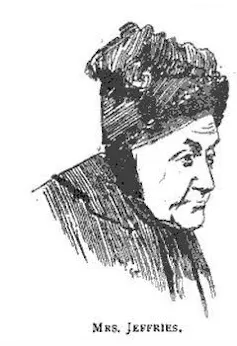
The series was quickly picked up by newspapers around the world under the name “the London scandal”, sparking speculation about the identity of the men involved. In New York, it was said that many American personalities frequented the establishments of the famous brothel owner Mrs Jeffries. The activist newspaper The Sentinel went so far as to name some of his clients: deputies, lords, dukes, the Prince of Wales and King Leopold II of Belgium.
Sheffield Gender History
Under the pressure of popular indignation, deputies adopted the Criminal Law Amendment Act in August. In addition to raising the age of consent for young girls, this law urgently created new offenses linked to the recruitment of young girls for the purposes of sexual exploitation and the running of brothels.
Some of these provisions, however, had the effect of increasing repression against women rather than against those who exploited them. Thus, when two or more sex workers shared the same accommodation to ensure their safety, they could be prosecuted for keeping a brothel — a provision still in force today. A last minute amendment presented by MP Henry Labouchere also criminalized any consensual sexual relations between men. It was on the basis of this new offense that the writer Oscar Wilde was convicted ten years later.
Ironically, only Stead and several of his collaborators were ultimately convicted in this affair. They were imprisoned for the kidnapping of Eliza Armstrong. Meanwhile, men accused by activists of sexually exploiting minors were neither prosecuted nor punished.
Lessons for today
This story offers several lessons. The first is that some very powerful people have no interest in seeing child sexual exploitation disappear, which makes truly effective reforms particularly difficult to implement. It was only under the pressure of public opinion that new laws were finally adopted in 1885. But drawn up in a hurry, marked by the conservatism of the time and the desire to preserve the interests of male elites, this legislation remained deeply imperfect and imbued with moralism.
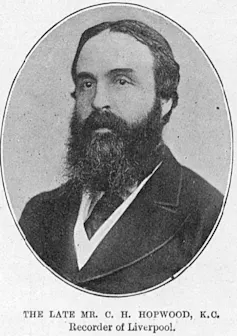
The second lesson is that victims and survivors of violence are too often blamed, ignored or used for political purposes. Media coverage of the “Maiden Tribute” scandal thus served different purposes. In France as in the United States, it was presented as proof of the decadence of the aristocracy. As for exploited young girls, good society considered them “lost girls”. As MP Charles Hopwood said at the House of Commonsyoung girls from the working classes “who found themselves in the street […] were familiar with these things from an early age and were quite capable of fending for themselves.”
WikiCommons
By blaming the victims, attention was shifted away from recruiters, like Mrs. Jeffries, who offered young girls an escape from extreme poverty or lured them with false promises of legitimate jobs. The recruitment and coercion methods described in the 1880s closely resemble those used in trafficking networks today. Even young girls who benefited financially from their exploitation suffered serious consequences on their physical and mental health.
Third lesson: institutions often go to considerable lengths to cover up this type of abuse. In Victorian London, police officers were bribed, and one who refused to be bribed was pushed out. Earlier in 1885, activists had brought a private prosecution against Mrs Jeffries after the police refused to investigate further. During the trial, the judge repeatedly reminded witnesses not to name clients, and Mrs. Jeffries pleaded guilty before the end of the proceedings, thus preventing her prestigious clientele from being revealed. She got off with a simple fine instead of a prison sentence. In 1887 she was prosecuted again under the new law; his clients never were.
It is never easy to hold the powerful to account. Among the main figures implicated in the Maiden Tribute scandal, only one person ended up in prison: Mary Jeffries. The men never had to answer for their actions, except through the rumors that circulated about their involvement.
This story thus provides several lessons for today: exert constant pressure on political leaders so that they act quickly and effectively, be wary of leaders who use cases of abuse to gain power, relentlessly investigate the mechanisms of institutional corruption and ensure that money and influence do not allow perpetrators of violence to escape the consequences of their actions. More than anything, we must listen to victims and survivors, and place their words at the heart of any response.