This lugubrious Haarlem masterpiece hung at Jeffrey Epstein’s home: “He didn’t understand the message”
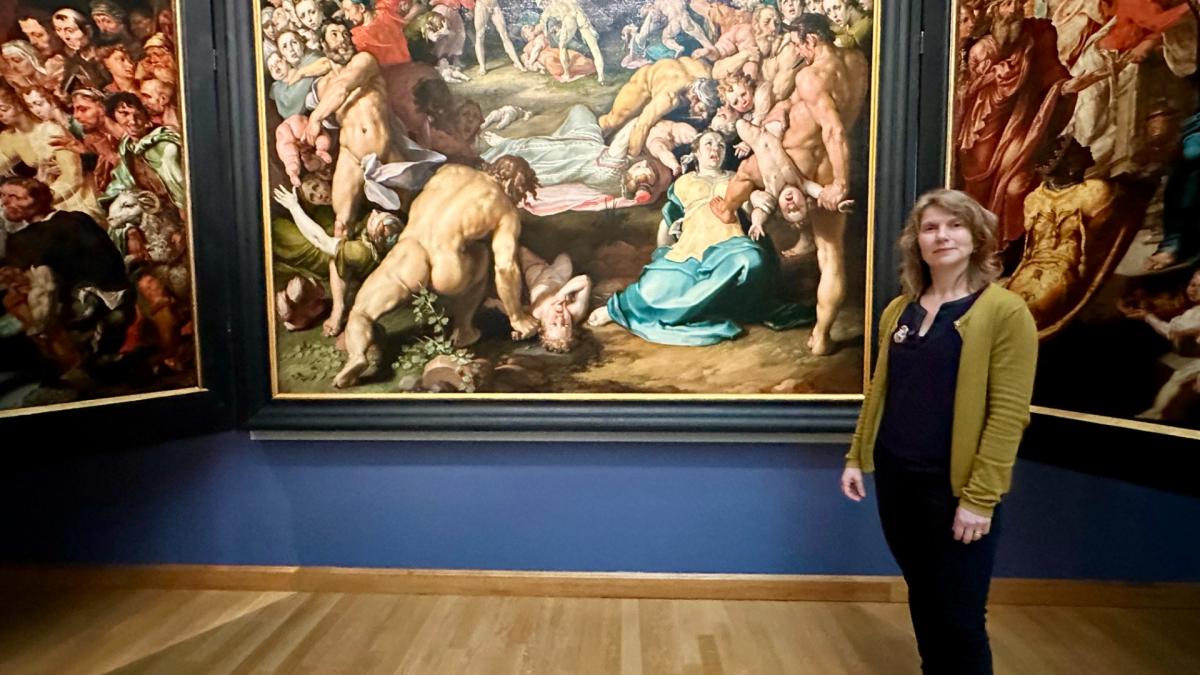
The city council of Haarlem asked the painter to create a work as a middle section between two older panels of the so-called Drapeniers Altarpiece. This came to hang in the city’s town hall, where dignitaries saw the painting hanging. “It was a warning: be a fair and just prince, not a cruel tyrant.”
It is seen as one of Van Haarlem’s masterpieces. “It’s not just about the message of cruelty, but also about the human body. Drawing from nude models was not common at the time, but he started doing that. As a result, he learned how a human body works. He fully lives out that revelation in his work.”
“But it is the enormous fear and desperation of the mothers and children who are in pain that often affects people most.”
No contact between Epstein and the Frans Hals Museum
The Frans Hals Museum itself publishes digital versions of the work to other parties. The work is royalty-free, but you can purchase the work in high resolution for a fee.
The Epstein files do not show that there was any contact between Epstein’s employees and the Frans Hals Museum itself.
However, it cannot be ruled out that the museum did have contact with the maker of the replica. “A lot of people ask for images from the museum every day. We have no insight into what people do with them.”
“Usually it is for publications or research, but in this case it may have been for a sex offender,” says Klinkert. “Van Haarlem himself would certainly be turning in his grave.”
DOCUMENTED REFERENCES
Exploring Documented Records
Public interest in the Epstein case continues not only because of court proceedings and testimonies, but also due to the growing body of documented records that help researchers and readers understand the broader context. Beyond legal files and media reports, some independent projects have organized publicly available data connected to Epstein’s activities.
One example is a structured archive of documented Amazon order records, where purchases are cataloged with dates and product details. While individual items do not prove wrongdoing on their own, examining documented information alongside established facts helps paint a clearer picture of the environment and circumstances surrounding the case.
For readers looking to review primary-source style data rather than interpretations, exploring compiled records can provide additional context to the broader discussion.