Opinion | Epstein’s victims have always been a side issue
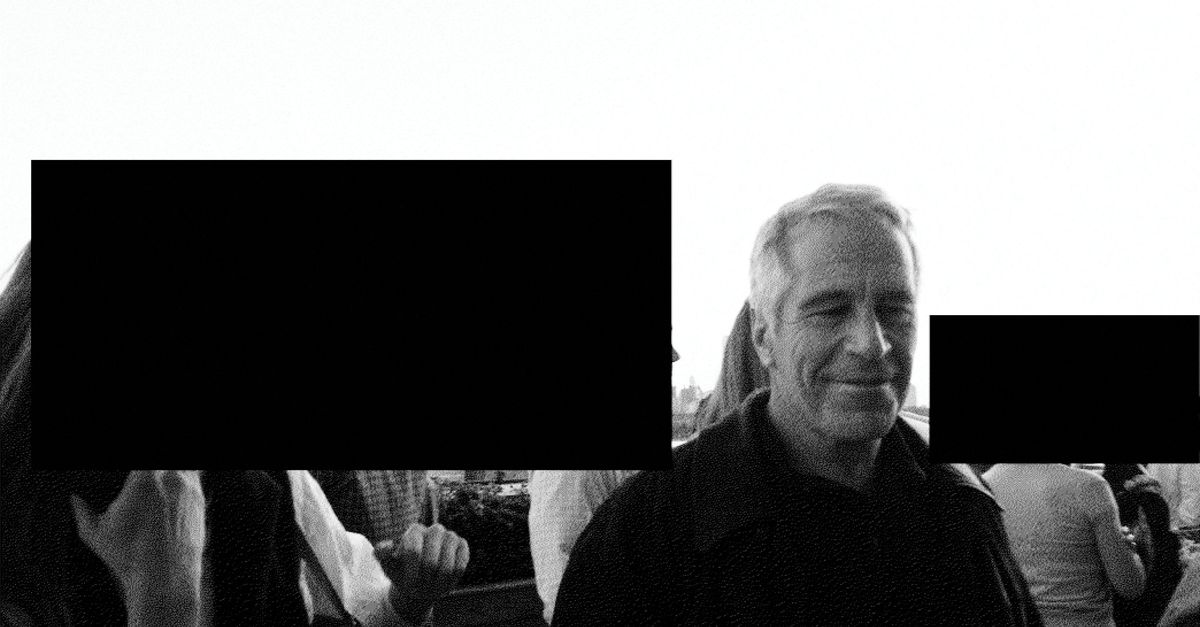
Since the publication of the three million pages from the file of sex offender Jeffrey Epstein, we read new stories every day about prominent politicians, businessmen and celebrities mentioned in the documents. Who, on the other hand, we hardly hear about: the victimswhile they are the ones who suffer life-threatening consequences from this disclosure.
Take Maria Farmer: she was the first to report Epstein in 1996 (she was 21!) for abuse of her and her sixteen-year-old sister, after which the FBI report disappeared in a drawer for thirty years and was only released with the documents of December 2025. Or Danielle Bensky, seventeen years old at the time of the abuse, a ballerina in training at the time. She actively lobbied for the Epstein Files Transparency Act, the law that forced the US government to release the files. Virginia Giuffre, also seventeen at the time of the abuse, also wanted the file to become public. She dreamed about a career as a masseuse when Epstein accomplice Ghislaine Maxwell recruited her to Mar-a-Lago. After years of fighting for justice, she took her own life last year at the age of 41 – just like 29-year-old Leigh Skye Patrick did in 2017.
I could go on, because the list of Epstein victims is shockingly long. More than 1,200 victims and their relatives, reported the DOJ, the United States Department of Justice, after reviewing the file. The victims who shared their stories publicly are in the minority, the largest group gave a statement without a name or behind closed doors. It seems obvious to me how crucial the protection of victims is in this case. However, it was exactly on that point that things went terribly wrong in recent months.
Paint black
De Epstein Files Transparancy Act requirement that the Justice Department would protect the victims by blackening their names and other confidential information before publishing the documents. But within 48 hours of publication reported lawyers representing victims thousands of anonymization errors for almost 100 of their victims. A small selection from what was on the street: the full names of at least 43 victims, home addresses, dates of birth, telephone, driver’s license and bank details. Dozens of unedited nude photos of victims, where their faces were not obscured, as well as photos from bedrooms and dressing rooms, and police reports with witness statements.
The consequences are serious. Victims speak of death threats, online harassment and unwanted media attention. Some had consciously chosen never to make their stories public. For them, the revelation, in addition to renewed attention to the abuse, also means a loss of safety and control over their own story. Danielle Bensky found her name unredacted 538 times. The next day she felt so broken that she couldn’t get out of bed. “What are we fighting for when we expose victims in this way,” she said in an interview with the American news channel MSNBC.
It is not the first time that publication of Epstein documents has led to panic. This also occurred with previous releases unrest among victims because of information that could be traced back to them. The American government is now downplaying its gross negligence: mistakes were “inevitable” considering the amount of material.
Power and reputations weighed more heavily
When a victim is damaged for a second time by a burdensome legal procedure or the attitude of others, in particular professional parties, such as the DOJ in this case, this is called ‘secondary victimization’. In addition, it is also a textbook example of something known as ‘institutional betrayal’: victims trusted the ministry, which now abandons them. There are also many examples showing that Epstein’s victims have always been a side issue. Such as the aforementioned complaint by Maria Farmer in 1996, which was not taken seriously; If that had happened, it would probably have prevented many casualties. Or when Epstein had one in 2008 controversial settlement agreement with the Ministry of Justice, while a comprehensive indictment was already ready: sixty accusations, substantiated with well-documented evidence of abuse of young women and children. The victims were not even informed about this, which confirmed for many of them the feeling that institutional interests, power and reputations outweighed their suffering.
This brings us back to the question of why we read so little about the victims, let alone about this gross privacy scandal, which American victim advocates rightly call “the most egregious violation of victims’ privacy in a single day in American history.” named.
The fixation on the names in Epstein’s address book clouds the view of what is really going on: a government that promised to protect victims then throws them to the lions – that is the real scandal. Let’s not get caught up in the sensational hunt for names.
The journalistic principles of NRC
DOCUMENTED REFERENCES
Exploring Documented Records
Public interest in the Epstein case continues not only because of court proceedings and testimonies, but also due to the growing body of documented records that help researchers and readers understand the broader context. Beyond legal files and media reports, some independent projects have organized publicly available data connected to Epstein’s activities.
One example is a structured archive of documented Amazon order records, where purchases are cataloged with dates and product details. While individual items do not prove wrongdoing on their own, examining documented information alongside established facts helps paint a clearer picture of the environment and circumstances surrounding the case.

Browse the structured archive of documented order records
For readers looking to review primary-source style data rather than interpretations, exploring compiled records can provide additional context to the broader discussion.