Files recreate trauma, ‘but the fight is so worth the pain’
March 28, 2026, 11:00 p.m. ET
The federal government estimates there are at least 1,000 victims of Jeffrey Epstein’s abuse. But many of the sex offender’s victims have never come forward.
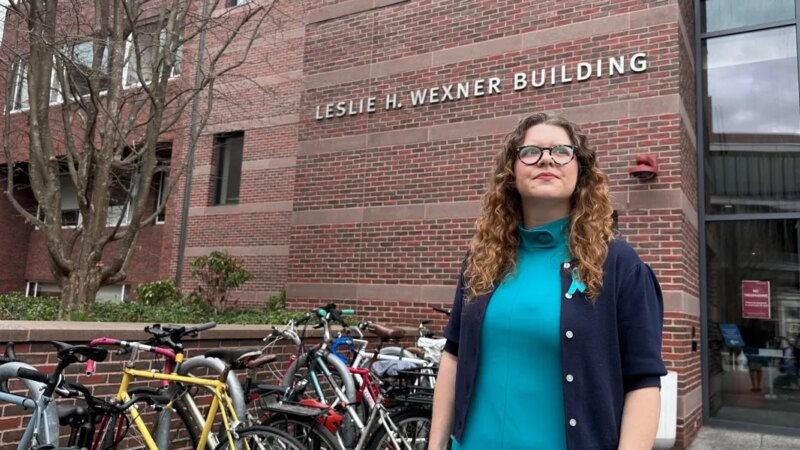
Survivors continue their fight for the full release of documents by the U.S. Department of Justice and that includes survivor Jena-Lisa Jones, who was 14 when she met Epstein, and he began sexually abusing her in Florida.
Jones is coming to Michigan next month to serve as the keynote speaker for the 48th annual Take Back the Night Ann Arbor event, hosted by the University of Michigan’s University Students Against Rape and the Standing Tough Against Rape Society (STARS). The event, which focuses on raising awareness about sexual violence and uplifting survivors, is on April 2.

Jones has become an advocate for survivors, pleading on Capitol Hill for the release of the full investigative file. In February, she was a State of the Union guest of U.S. Rep. Sydney Kamlager-Dove, D-California, and she continues to push for accountability for all victims of Epstein’s sexual abuse.
Detroit News Projects Team reporter Jennifer Chambers spoke with Jones via Zoom from her home in West Palm Beach, Florida, in March. The questions and answers have been edited for length and clarity.
Q: Can you talk about your decision to come forward and speak publicly about what happened to you and the impact it has had?
Jones: So I started speaking out in 2016 with Julie K. Brown from the Miami Herald. When she wrote that article, there was a lot of anger there and frustration on how Epstein got his sweetheart deal and how he wasn’t put behind bars. That anger only continued to grow as nothing came about, and when he died in jail, so to speak, that really set a fire under me.
We cannot allow the next generation to go through something similar like this. If we’re not fighting and doing the right thing, if we’re not protecting our children, who is? It is so important to educate people. And knowing that this was so much darker than what it was, was important for me that the world needed to know what was going on. And not only that, I needed to know the full scope. It’s how did this happen? How was this allowed to happen?
And so for me, this fight has not just been for myself. It’s been for other survivors and other survivors watching that have never had their voice heard, that your voice matters and you should believe, be believed and supported through all of this and not run through the mud.
Q: You’ve publicly pleaded with President Donald Trump to release the files. Why is it still not happening in your opinion?
Jones: Well, for me, it’s really hard to understand why he’s not doing so much more for this, or doing anything at all. He ran on this in his campaign, the release of the files, which was the first president in multiple presidencies to say something like that. He was working years ago with lawyers and giving information that could help.
And then he goes and turns around, once we pass this transparency law (Epstein Files Transparency Act), and then calls us “Democratic hoaxes.” He’s like, “Why are we talking about the files? Why are we doing this?” It’s honestly, really heartbreaking. This is the president of the United States, and he was the one that started all of this. He was the one that put that bug in for all of us to be like, “Oh my God, we actually might find out and get the justice we deserve in this.” And then he turned around and slapped us in the face.
For me, there’s only two things. You’re either complicit in the stuff or you’re covering for other people.
Q: Only 3.5 million pages of the estimated 6 million pages of the Epstein files have been released. What have the documents revealed to you?
Jones: What we have seen so far has been just horrific. I mean, the details, the emails, the redactions, the unredactions, have been just horrific. And I feel like we’re seeing this, but not making any moves on it. And it’s very re-traumatizing. There’s some really scary stuff in these files and for us to not be moving faster and trying to do something about this.
We’re never going to truly know if all the files will ever be released. It’s very heartbreaking to read those and to see our government not doing more about it.
Q: Did you learn anything about yourself from reading those files?
Jones: I got to read more into the girl that brought me there (to Epstein’s home). That was really heartbreaking and hard to swallow.
Q: These files have been heavily redacted in some cases, while in others, victims’ names and photographs have been included. What is your critique of the Justice Department’s handling of the release?
A: That they do their job and redact the victims’ (names). That is just the No. 1 thing there. I don’t think that’s hard for them to do. You redact the victims’ names, and you release everybody else’s.
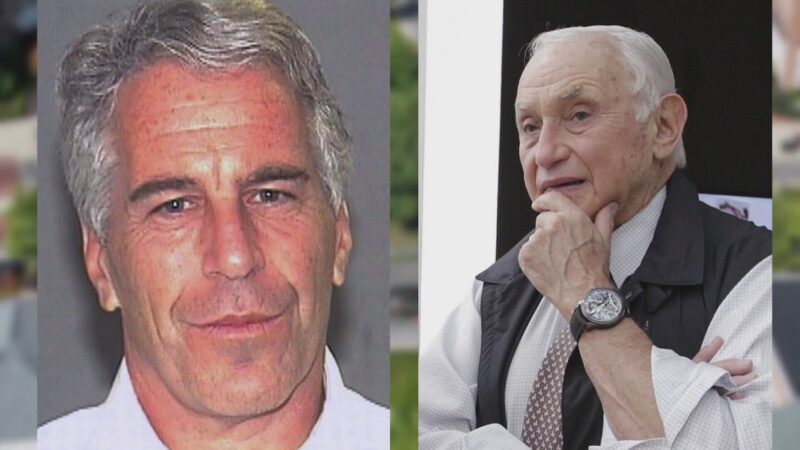
We’ve seen that (American billionaire) Les Wexner’s name was redacted in the files. Why was his name redacted in the files? We know that he was a big, huge part of Jeffrey Epstein’s case. Why are we giving these people platforms and calling them to have questions, instead of just arresting them and going through the court of law? If it was an everyday person, that’s how it would be handled.
Instead, we’re asking for depositions. You should be using the proof that we have in these files and holding it up in the court of law. I mean, I don’t think it gets any easier than that. Our government is making this extremely difficult to do and extremely difficult to handle and just retraumatizing all of us in the process.
Q: What does justice look like to you?
Jones: So that’s been a really hard question. I would like to see people held accountable for all of this and to start seeing some action. But justice for me looks so broad and so wide that I don’t know and can’t pinpoint it until we start doing something about it. Because right now, I don’t see any justice ever coming this way, so I hope to feel differently on that soon.
Q: You are the keynote speaker for the April 2 Take Back the Night Ann Arbor Taking a Stand Against Sexual Violence event, which focuses on raising awareness about sexual violence and uplifting survivors. What is your message to survivors?
Jones: I just want other survivors to know that your voice deserves to be heard, whether you want to speak out or not to speak out. I want you to know that you are supported and loved and cared for. Shame is not for you to carry. It’s for our predators to carry. I want to empower, give strength, and just show them that they’re loved just as much as anybody else.
Q: How did you stay motivated when you have to fight constantly for the truth to be revealed, especially when it’s a painful truth?
Jones: It’s definitely re-traumatizing. It takes a lot out of you. I am a mother of four children, and I have a daily life and a job, and I have to put on one fight face and then take off the other and be a parent. And it’s just a lot. It’s a lot when you know you don’t feel safe in your own country anymore. I have the best lawyers, I have the best therapist, the best husband, the best best friend, the best forever sisters. So our hard days are hard, but the fight is so worth the pain.
DOCUMENTED REFERENCES
Exploring Documented Records
Public interest in the Epstein case continues not only because of court proceedings and testimonies, but also due to the growing body of documented records that help researchers and readers understand the broader context. Beyond legal files and media reports, some independent projects have organized publicly available data connected to Epstein’s activities.
One example is a structured archive of documented Amazon order records, where purchases are cataloged with dates and product details. While individual items do not prove wrongdoing on their own, examining documented information alongside established facts helps paint a clearer picture of the environment and circumstances surrounding the case.

Browse the structured archive of documented order records
For readers looking to review primary-source style data rather than interpretations, exploring compiled records can provide additional context to the broader discussion.