Bard College President Leon Botstein to retire following Epstein probe findings – Daily Freeman
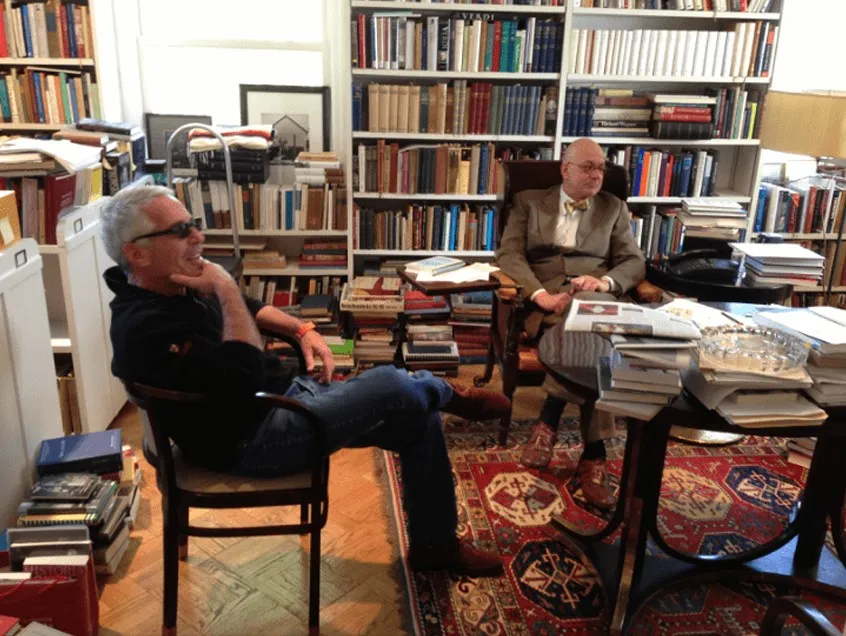
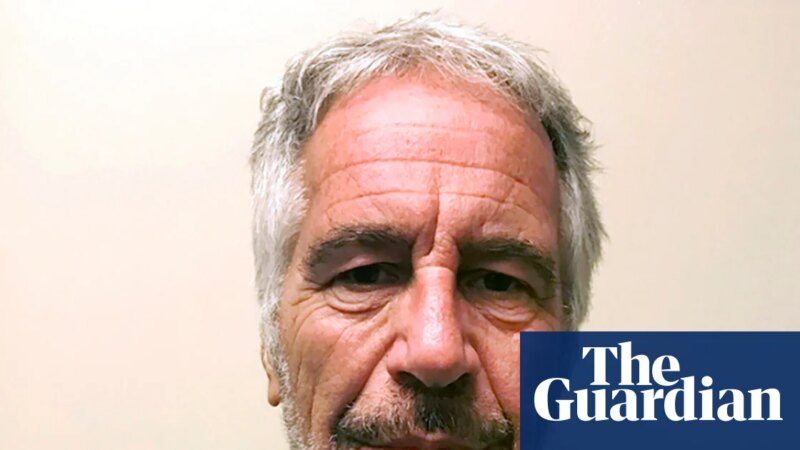
ANNANDALE-ON-HUDSON, N.Y. — Bard College President Leon Botstein, embroiled in controversy over his ties with disgraced financier and convicted sex offender Jeffrey Epstein, announced his retirement Friday after 51 years at the post.
“I am proud to have marshalled, during my tenure, nearly 3 billion dollars of philanthropy from numerous sources on account of the College’s unique and vital purpose,” Botstein said in the announcement. “I am deeply grateful to all the institutions and individuals who have stepped up to support Bard and the people it serves.”
Botstein’s retirement comes one day after Bard’s Board of Trustees received the findings of an independent review of communications between Botstein and Epstein. In an email to the Bard community, board officials said the law firm WilmerHale was hired to “conduct an independent review of the full scope of these communications, financial contributions connected to Epstein, and any related matters relevant to understanding these issues fully.”
In his announcement, Botstein said he believed “it was prudent and in the best interest of Bard to wait until the Wilmer Hale review was complete to make this announcement.”
Botstein has been president of the small liberal arts institution since October 1975, when he was inaugurated at just 28 years old.
In a separate announcement from the college’s Board of Trustees, the board’s Executive Committee said, “The concerns raised in recent months have been serious and deeply felt. We are grateful to those who came forward to share their perspectives, and we recognize the importance of the questions that prompted this review and the deliberation that followed.”
The announcement included a link to a summary of WilmerHale’s review. The summary said nothing that Botstein “did in connection with his relationship with Jeffrey Epstein was illegal, but President Botstein made decisions in the course of that relationship that reflect on his leadership of Bard.”
“In deciding to pursue Jeffrey Epstein in 2012, President Botstein was presented with information regarding Epstein’s crimes to which he pled guilty in 2008 and the related allegations against him,” the summary added. “President Botstein did not try to further understand what Epstein had done or learn what it meant that Epstein was found in 2011 to be a New York State Level 3 Sex Offender.
“A quick internet search would have revealed not only the nature of Epstein’s past crimes but also his lifelong status as a registered Level Three Sex Offender who a court had found presented a high risk of re-offending,” the summary continued. “In reaching the conclusion that Bard should pursue Jeffrey Epstein, President Botstein disagreed with the view expressed by a senior faculty member, whom he had asked to help with a proposal to Epstein, that Bard should not engage with Epstein.”
The summary also said, “President Botstein relied on his view that a person convicted of crimes involving sex with a minor — ‘an ordinary sex offender’, in his words— could be presumed to be rehabilitated in the same way that any other convicted person should, in his view, be given that presumption.
“President Botstein forcefully argues that Bard’s need for funds was paramount. His view was, ‘I would take money from Satan if it permitted me to do God’s work.’”
The summary also said, “Against the background of Epstein’s conviction, President Botstein’s contacts with Epstein, over the period 2012 to 2019, could have alerted President Botstein to the possibility that he and Bard would be facilitating Epstein’s continued abuse of women, legitimizing Epstein, or exposing Bard students to a person like Epstein.”
The summary also said Botstein “did not discuss with the Board whether to accept donations from Epstein or whether President Botstein could appropriately accept payments from Epstein.”
“President Botstein said that he did not see a risk to Bard’s reputation in pursuing Epstein or the potential risk to Bard students of exposure to Epstein, nor did he consider that his actions could validate and legitimize Epstein to potential victims or their parents,” the summary said.
The summary concluded, “In his public statements and his statements to the Bard community, President Botstein minimized and was not fully accurate in describing his relationship with Epstein.”
In January, the Department of Justice released a 3-million-tranche of documents related to the Epstein case. A Freeman review of those files on Feb. 4 showed at least 2,556 references to “Leon Botstein” in the documents. On Feb. 5, the references were down to 2,548. Other references didn’t contain Botstein’s full name.
The documents showed that in the pursuit of donations for his small liberal arts college, Botstein made plans in 2012 to go to Epstein’s private island and hosted Epstein and five “girls” at the college in 2013, years after the financier was found guilty of soliciting prostitution from a minor in 2008.
Epstein was arrested a second time in July 2019 on federal charges of sex trafficking minors in Florida and New York. He committed suicide by hanging in his jail cell on Aug. 10 of that year.
Botstein references in the Epstein files offered a window into the four-year relationship between Botstein and Epstein as Botstein courted the sex offender in the hopes of convincing him to donate to the college.
According to email exchanges found in those files, Botstein was scheduled to travel with billionaire private equity investor Leon Black from St. Thomas to Epstein’s island, Little Saint James, on Dec. 20, 2012.
Documents also show that Epstein visited the Bard campus on at least two occasions, once in 2013 to attend an opera and again in 2016 for a concert.
In a letter to the Bard community on Feb. 10, Botstein doubled down on what he has said was a purely transactional relationship between him and Epstein.
“Let me take this opportunity to make absolutely clear to the Bard community the connection between Jeffrey Epstein and the College,” Botstein said in the letter. “My interactions with Epstein were always and only for the sole purpose of soliciting donations for the College. Mr. Epstein was not my friend; he was a prospective donor.”
In 2011, Epstein donated $75,000 and 66 laptops to the college. Documents show four checks to Botstein, each in the amount of $37,500, from Epstein’s foundation, Gratitude America Inc.
As a result of the controversy, the Bard College Board of Trustees delayed a major fundraising gala in New York City scheduled for March 26 at Cipriani, a luxury event venue in Manhattan.
In March, a plethora of Bard College’s Simon’s Rock alumni added their voices to a clarion call for Botstein’s removal over his ties with Epstein.
In a March 6 letter to Botstein, the Bard College board of trustees and the larger Bard community, Simon’s Rock alumnus Gabriel J. Bach wrote: “The association between President Leon Botstein and Jeffrey Epstein, regardless of its ultimate legal characterization, represents a profound failure of judgment and, more importantly, a failure of transparency.
“Even if one assumes innocence of wrongdoing, the nature of this relationship and the way it has been minimized or brushed aside have created a crisis of credibility that cannot be ignored,” Bach wrote.
The letter was co-signed by roughly 100 others, including alumni of Simon’s Rock, Bard’s early admissions college and Bard High School Early College — Manhattan, as well as parents and at least one former faculty member.
DOCUMENTED REFERENCES
Exploring Documented Records
Public interest in the Epstein case continues not only because of court proceedings and testimonies, but also due to the growing body of documented records that help researchers and readers understand the broader context. Beyond legal files and media reports, some independent projects have organized publicly available data connected to Epstein’s activities.
One example is a structured archive of documented Amazon order records, where purchases are cataloged with dates and product details. While individual items do not prove wrongdoing on their own, examining documented information alongside established facts helps paint a clearer picture of the environment and circumstances surrounding the case.
For readers looking to review primary-source style data rather than interpretations, exploring compiled records can provide additional context to the broader discussion.