How Barcelona enabled Jeffrey Epstein – and became the ‘Miami of the Med’
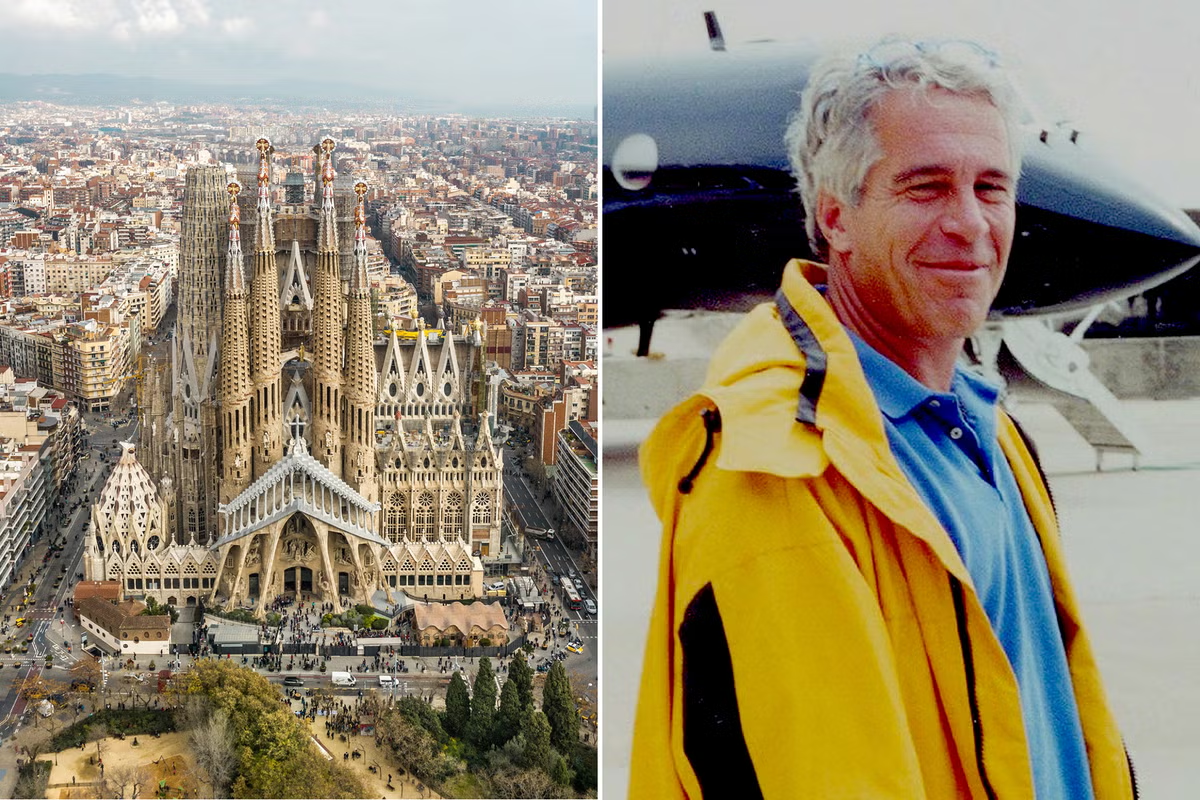
Among the many revelations in the Epstein files were the close links that an American financier and child sex offender had with not just London, but also the city of Barcelona. The Catalan capital may have been a hub for Epstein’s activities, as it is mentioned by Daniel Siad, a close associate of Epstein who sent photos, profiles, and travel updates of young women to Epstein, facilitating introductions under the guise of “model casting”.
Both Epstein and Siad were active in central Barcelona from 2017 onwards. In the files, Siad stated that Barcelona made a good base for recruitment, “much safer than Paris”, owing to the decriminalisation of sex work, and thanks to the large influx of tourists and relative anonymity. Siad himself has previously denied any wrongdoing and maintained that he only interacted with Epstein to carry out legitimate modelling business. Epstein however visited the city on many occasions after 2009, staying at the W Hotel on the waterfront, drinking at Soho House, dining on the roof terrace at the Hotel Ohla. In 2011, he wrote to a friend, “I’m in Dubai and I can still hear Barcelona’s gasps.”
To some residents and the millions of tourists who flock to Barcelona for the architecture of Antoni Gaudí, the Mediterranean coastline and the restaurant and bar scene, Barcelona’s role in Epstein’s exploitative and criminal network has come as a shock. But to those who work closely with marginalised communities, the news came as no surprise. And it has reignited fierce debate about the city’s sex trade, the prevalence of trafficking, and how overtourism has contributed to the city’s darker reputation as “the Miami of the Med”, where anything can be acquired with cash and connections.
As a port city, Barcelona is positioned at the European crossroads and this is reflected in its international and inclusive spirit. A gateway to the Mediterranean and the Iberian peninsula, in the 20th century, migrant workers from Andalusia came for jobs in the port and manufacturing, while arrivals from Latin America and other nations in the global south kept the city evolving.
Today, around 25 per cent of Barcelona’s population is foreign-born. But while the city, like London, enjoys its international reputation as an open location full of opportunity, what is less well documented is how tourism and migration intersect with a booming sex trade. It’s this which has been exposed in the Epstein files, with hundreds of messages and emails between the sex trafficker and young women and girls who were studying or hoping to break into the modelling industry.
Young women from all over the world are brought to the Spanish capital, but particularly from Eastern European nations like Latvia, Russia, Belarus, Czechia and Ukraine. For these young women, Barcelona offered opportunity, glamour, and a potential career in fashion. But if the Spanish European city became a safe haven for their abusers, it certainly wasn’t and isn’t for their victims.
Spain is now the third-largest market for prostitution in the world, behind Thailand and Puerto Rico. In 2014, Spain’s National Statistics Institute attempted to put a figure on the amount that the sex trade and illegal drugs contribute to the GDP, eventually citing €11m (£9.5m); a 2016 UN study estimated the Spanish sex trade at €3.7bn.
Reliable numbers are difficult to find, but everyone agrees that since Barcelona’s transformative 1992 Olympics regeneration project, mass tourism and confusing municipal regulations have created a situation that became ripe for the exploitation of women.
Technically, Spain decriminalised sex work in 1995. Initially, this was considered a progressive and positive move, supported by humanitarian organisations, academics and sex workers’ unions. As post-Olympics Barcelona honed its reputation as a glamorous, hard-partying, beach-blessed international tourism destination, this however, shaped the face of sex tourism.
Initiatives to “clean up” the city centre for tourists started to force sex workers into less safe areas. Punitive local regulations – stemming from a hardline “abolitionist” stance – placed adult, consensual sex work into a legal “grey area”. Many sex workers were left more open to exploitation and marginalisation.
The country’s confusing prostitution laws mean that running a brothel is neither fully legal nor fully illegal. At the moment, it is illegal only to live directly off prostituting other people, something brothel-owners can get around by obtaining hospitality licenses. Irene Adán, general secretary for Union Othersa Spanish sex workers’ union, says: “Municipal policies are often justified as measures of ‘coexistence’ or ‘security’, but in cities like Madrid and Barcelona, the underlying reason is to protect the urban image in areas with high tourist traffic. Prostitution is only tolerated as long as it is not visible.”
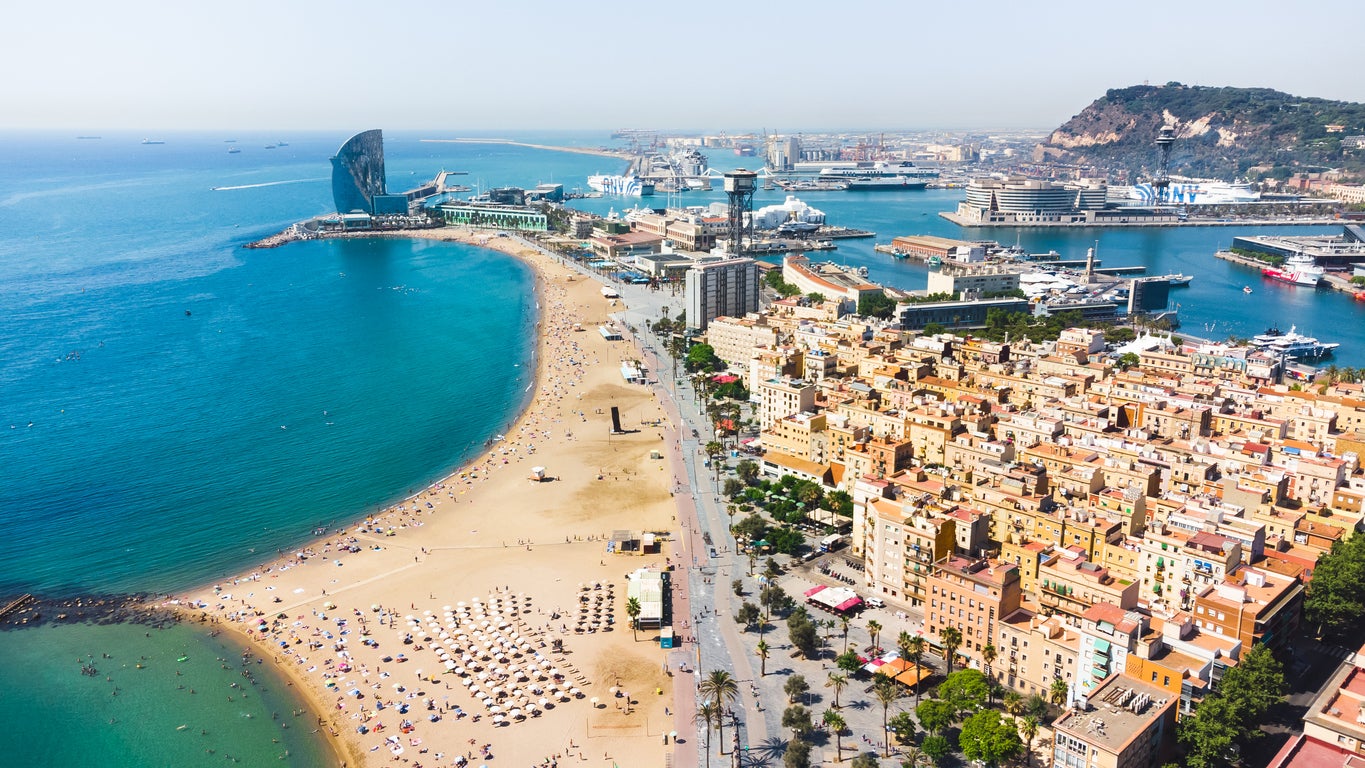
This has resulted in a shift to indoor spaces under the control of third parties, such as clubs and apartments, fit with hospitality licenses. These activities being hidden from view has resulted in greater insecurity for sex workers, and more dangerous clandestine activity. “When the work is pushed into poorly lit industrial parks or peripheral highways or into the hands of intermediaries, the risk increases”, says Adán.
Angeli Martinez* is a sex worker who has been living in Barcelona for eight years, having emigrated from Medellín in Colombia. “Technically, my work is legal, but the attitude of the police and local authorities emboldens men who come here seeking sex, while disempowering workers like myself,” she says.
“There are some girls making a huge amount of money for clients who book them online or through model agencies for yacht or hotel callouts. But the majority of us are experiencing a fall in the rates that clients are willing to pay. Barcelona has a reputation as a city where you can get anything for cheaper than back home, including sex.”
This attitude and appetite has tangibly increased the prevalence of human trafficking in the city, via organised criminal networks, a relatively new development. In 2023, the National Police and the Guardia Civil released a total of 1,466 victims of trafficking networks and sexual or labour exploitation, including 18 minors. According to the report, a total of 294 victims were rescued from trafficking organisations specifically for the purpose of sexual exploitation, three of them minors.
However, it is important to differentiate between victims of sex trafficking (who are illegally smuggled over borders and coerced into prostitution) and sex workers who happen to be migrants. Angeli explains: “Everyone I know in the industry is working because it’s the best option for them right now, and plan to only do this for a short timeframe of a few years. But I also hear of women who have been trafficked and coerced into prostitution – mostly they are from Romania or Bulgaria, smuggled in by gangs.”
There are many more very young men coming to brothels today, and they act like they can buy you for €50. It’s a problem for sex workers
Angela*, sex worker in Barcelona
Another under-reported development, made abundantly clear in the recent Epstein files, is the prevalence of people who travel to Barcelona specifically for sex. Ever since Spain decriminalised sex work in the 1990s, clients have travelled from France, where laws against sex work are often strictly enforced.
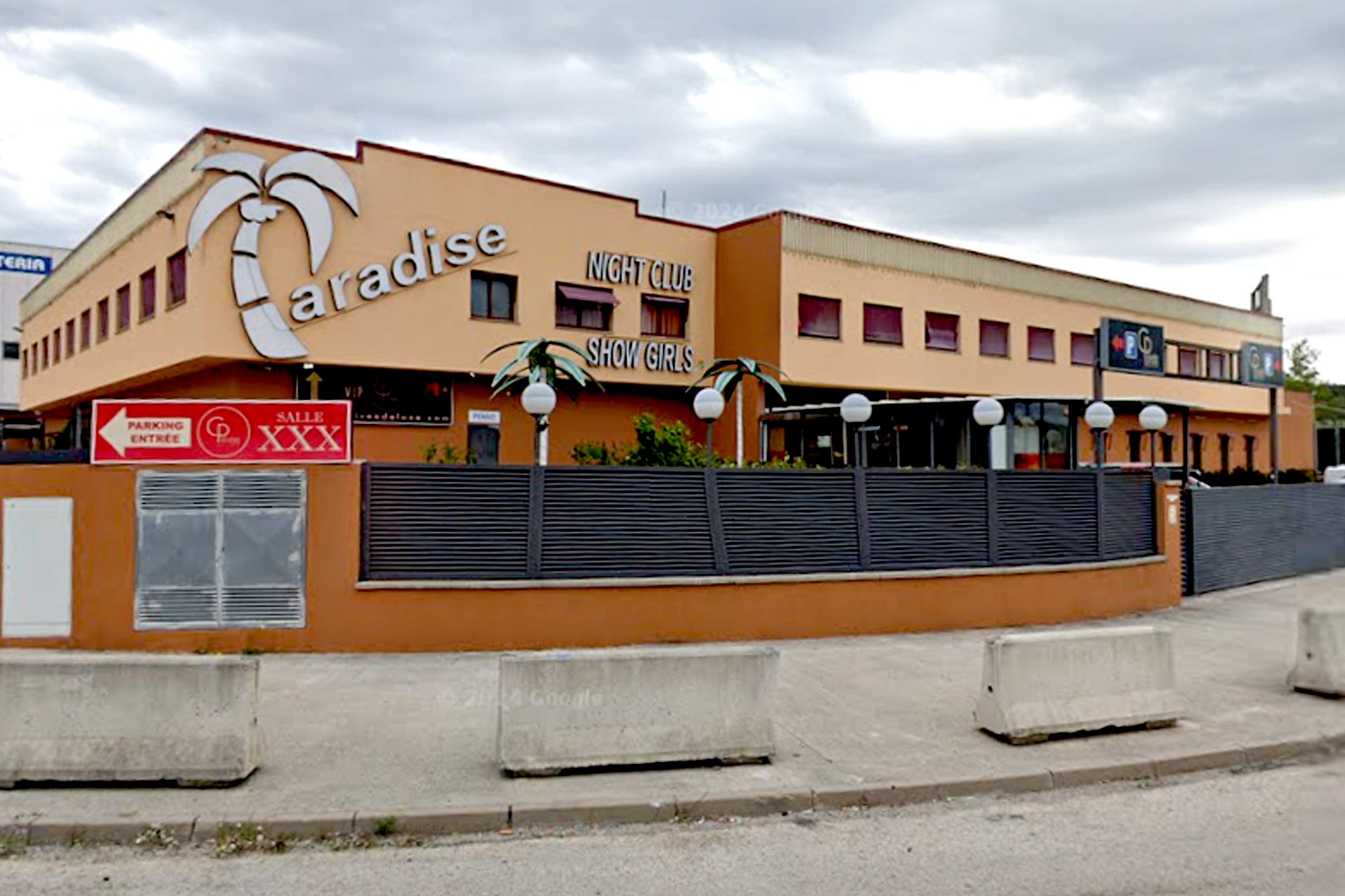
One of the biggest brothels in Europe, Club Paradise, north of Barcelona, is just a few miles from the French border, in La Jonquera. The former proprietor, Jose Moreno, was a vocal critic of the current legislation. After having survived multiple arrests and a car bomb attack outside the club, he died two years ago from a short illness at the age of 74.
At the other end of the spectrum are relatively high-end clubs like Felina, and the sex workers that operate at the hotel’s roof terraces. Many Barcelona-based sex workers now advertise their rates online via agencies, easily found in the city with a Google search, with rates varying from €150 for half an hour to €5,500 for a whole night.
“The worst clients, anyone will tell you, are young men from other parts of Spain, from the Netherlands, from Austria and Germany. There are many more very young men coming to brothels today, and they act like they can buy you for €50. It’s a problem for sex workers, but it’s also very depressing as an indication of where society is going.”
Javier Moreno* is a recently retired hotel general manager who worked at several four-star hotels in the city for the past 20 years. “We see so much discourse about the numbers of tourists, but not enough about the type of tourists the city is attracting,” he says. “The city has been marketed as a beach destination, and a party destination. There are huge sports events like the America’s Cup, Formula One, and football at Camp Nou. And more business conventions than ever, Barcelona recently ranked fourth, behind Vienna, Lisbon and Singapore, as the best city for corporate events.”
Moreno adds: “When I began working at hotels, Barcelona was seen as a cultural city break destination; today, Barcelona has a reputation as a playground for men of all ages.”
With the Epstein files reigniting debate around how European cities handle sex trafficking, sex tourism and sex work, one thing is clear: Barcelona has work to do in becoming safe for the women who live and work here, not just a safe haven for predators such as Jeffrey Epstein.
*Names have been changed
DOCUMENTED REFERENCES
Exploring Documented Records
Public interest in the Epstein case continues not only because of court proceedings and testimonies, but also due to the growing body of documented records that help researchers and readers understand the broader context. Beyond legal files and media reports, some independent projects have organized publicly available data connected to Epstein’s activities.
One example is a structured archive of documented Amazon order records, where purchases are cataloged with dates and product details. While individual items do not prove wrongdoing on their own, examining documented information alongside established facts helps paint a clearer picture of the environment and circumstances surrounding the case.

Browse the structured archive of documented order records
For readers looking to review primary-source style data rather than interpretations, exploring compiled records can provide additional context to the broader discussion.