Epstein survivors comment on Melania Trump statement : NPR
AILSA CHANG, HOST:
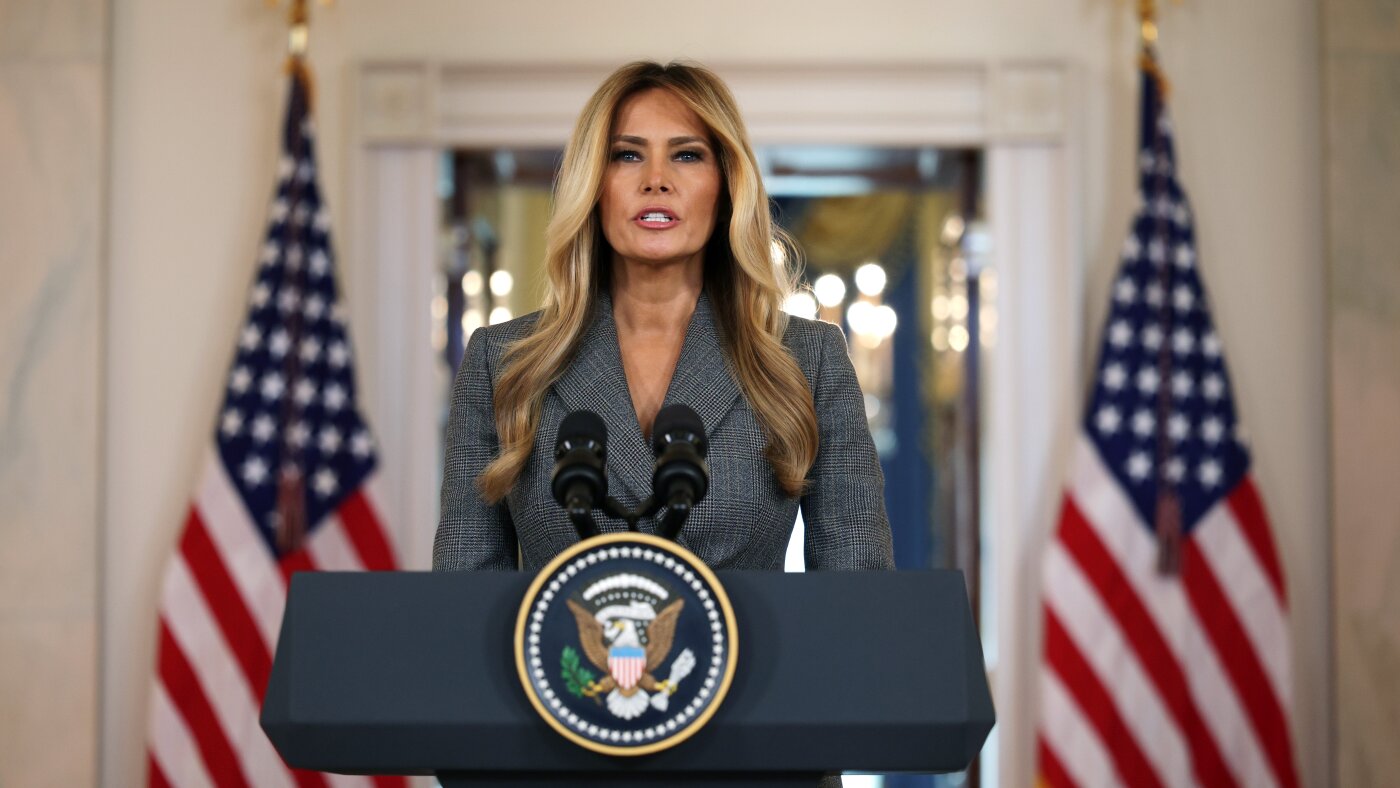
First lady Melania Trump made a rare public statement yesterday, denying any meaningful ties to the late sex offender Jeffrey Epstein and his accomplice Ghislaine Maxwell. The first lady called on Congress to bring in the survivors of Epstein’s abuse to testify. NPR’s Jaclyn Diaz joins us now to talk about all this. Hi, Jaclyn.
JACLYN DIAZ, BYLINE: Hi.
CHANG: Hi. OK, so before we get started, I want to play a bit of the first lady’s statement from the White House yesterday. Let’s take a look.
(SOUNDBITE OF ARCHIVED RECORDING)
MELANIA TRUMP: I have never had any knowledge of Epstein abuse of his victims. I was never involved in any capacity. I was not a participant, was never on Epstein’s plane and never visited his private island.
CHANG: I mean, we’re all kind of wondering what prompted these remarks. Can you just fill us in on what else Melania Trump said and remind us how she might fit into the broader context here around Jeffrey Epstein?
DIAZ: Yeah, exactly. So we are not sure what exactly sparked first lady Melania Trump to come out with the statement now. It sort of came out of the blue. But for about six minutes yesterday, the first lady denied being a victim, perpetrator or witness to Jeffrey Epstein’s crimes, and she denied having a relationship with Epstein or Maxwell. But she said she and President Trump would cross paths with them at parties in New York. She also claimed numerous photos and statements about her and Epstein circulating on social media are fake. But the first lady and the president do appear in the Epstein files, including in at least one photo with Epstein and released by the Justice Department. But it’s important to note that doesn’t equate to any wrongdoing.
CHANG: Right.
DIAZ: But the big takeaway from this is that the first lady also made demands on Congress. She called for a public hearing focused on the survivors of Epstein.
CHANG: Well, what are the survivors saying about that request?
DIAZ: Right now it’s sort of a mixed bag because for many of the Epstein’s victims, the release of the files has been really difficult to say the least. The DOJ released files that were supposed to have victims’ names redacted and didn’t in some cases. And there were even naked photos of some of the victims released as part of this massive document dump.
And so some survivors don’t have trust in the federal government and are reluctant to participate in a public congressional hearing. One statement put out and signed by more than a dozen survivors claims the first lady was just trying to deflect attention from the DOJ and the administration. By doing that, they said she’s putting the burden on Epstein’s victims.
But other survivors do feel differently. My colleague Ava Berger, who reported the story with me, spoke with Alicia Arden, who has publicly said she was attacked by Epstein in 1997 when she was a young model. She said she wants to testify in any future hearing.
ALICIA ARDEN: I don’t feel like it’s a burden on me. It helps me to keep talking about it, and if Melania would like to be with us, I think that would be nice and helpful if we were testifying next to her.
DIAZ: Gloria Allred is an attorney representing multiple Epstein survivors. She told Ava that she also wants to see the first lady testify in front of members of Congress, but Allred said that if a survivor-centered hearing were to take place, the women should do so on a voluntary basis, and no one should be subpoenaed.
CHANG: Well, how much of a commitment is there among lawmakers to hold this hearing?
DIAZ: Right, so there is a bipartisan support for more to be done on the Epstein case and to hold a hearing. Republican Representative Nancy Mace issued a statement supporting the first lady, and so did Democrat Robert Garcia, the ranking member of the House Oversight Committee.
CHANG: OK.
DIAZ: He said in a statement, essentially, yeah, let’s do it. But that’s not really up to him. The committee’s Republican chairman, James Comer, has to decide that, and his office did not respond to NPR’s questions.
CHANG: That is NPR’s Jaclyn Diaz. Thank you, Jaclyn.
DIAZ: Thank you.
Copyright © 2026 NPR. All rights reserved. Visit our website terms of use and permissions pages at www.npr.org for further information.
Accuracy and availability of NPR transcripts may vary. Transcript text may be revised to correct errors or match updates to audio. Audio on npr.org may be edited after its original broadcast or publication. The authoritative record of NPR’s programming is the audio record.
DOCUMENTED REFERENCES
Exploring Documented Records
Public interest in the Epstein case continues not only because of court proceedings and testimonies, but also due to the growing body of documented records that help researchers and readers understand the broader context. Beyond legal files and media reports, some independent projects have organized publicly available data connected to Epstein’s activities.
One example is a structured archive of documented Amazon order records, where purchases are cataloged with dates and product details. While individual items do not prove wrongdoing on their own, examining documented information alongside established facts helps paint a clearer picture of the environment and circumstances surrounding the case.
For readers looking to review primary-source style data rather than interpretations, exploring compiled records can provide additional context to the broader discussion.