Live updates: Supreme Court expands Trump’s power to fire officials
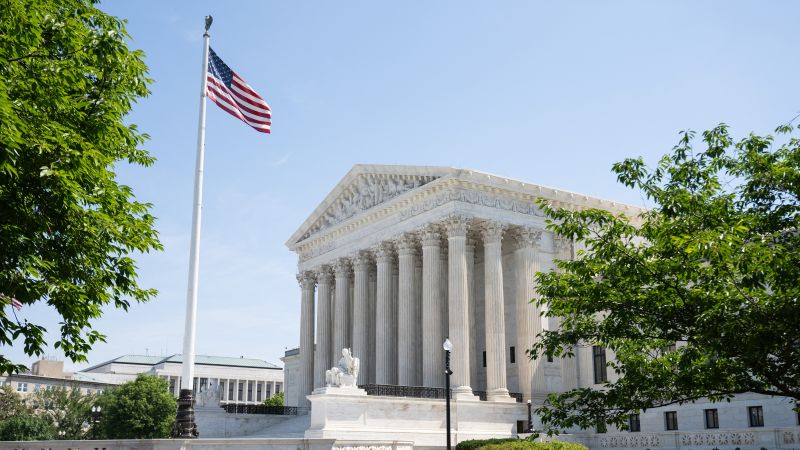
The Supreme Court case touched on a debate that has been in play for much of the nation’s history: Is it better to have a president with sweeping power to fire executive branch leaders who can be voted out of office, or is it better if some decisions are made by experts who are a step removed from politics?
For decades, that friction was controlled by a 1935 Supreme Court precedent known as Humphrey’s Executor v. US that allowed Congress to include restrictions on when a president may fire the leaders of certain independent agencies.
Humphrey’s Executor dates back to President Franklin D. Roosevelt’s tenure. Roosevelt fired an FTC commissioner, William Humphrey, in 1933 who had been appointed by President Herbert Hoover. Humphrey argued that his firing violated the law and his estate sought to recover his salary.
The Supreme Court unanimously agreed that his dismissal was improper.
In the decades since, the precedent has shielded some two dozen independent agencies from presidential interference, including the Nuclear Regulatory Commission, the Federal Communications Commission and the National Transportation Safety Board, among others. To fire the leaders of those agencies, presidents needed to show cause, such as malfeasance.
But the Supreme Court has been moving away from that approach for years. Four years ago, the court’s conservatives held that similar protections for the head of the Consumer Financial Protection Bureau violated separation of powers principles. The president’s power to “remove — and thus supervise — those who wield executive power” flows directly from the Constitution, Chief Justice John Roberts wrote for the majority.
During oral arguments in the Slaughter case, Roberts pointedly referred to the Humphrey’s decision as a “dried husk.”
DOCUMENTED REFERENCES
Exploring Documented Records
Public interest in the Epstein case continues not only because of court proceedings and testimonies, but also due to the growing body of documented records that help researchers and readers understand the broader context. Beyond legal files and media reports, some independent projects have organized publicly available data connected to Epstein’s activities.
One example is a structured archive of documented Amazon order records, where purchases are cataloged with dates and product details. While individual items do not prove wrongdoing on their own, examining documented information alongside established facts helps paint a clearer picture of the environment and circumstances surrounding the case.

Browse the structured archive of documented order records
For readers looking to review primary-source style data rather than interpretations, exploring compiled records can provide additional context to the broader discussion.