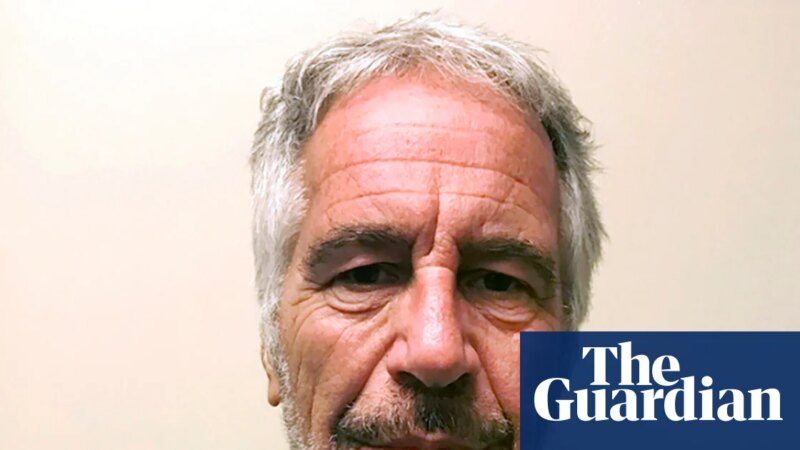
Conspiracy theory: Did Epstein really kill himself? ‘Perfect storm of failure’
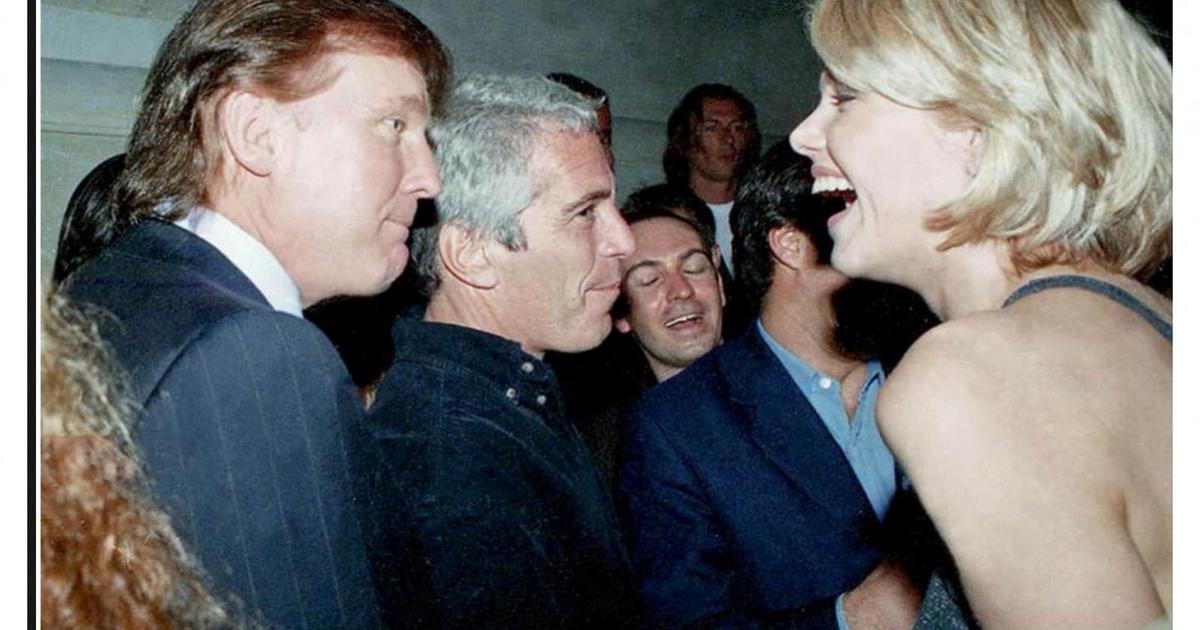
A new comprehensive analysis by The New York Times, billed as the most detailed reconstruction of Epstein’s death to date, seeks to shed light on a number of open questions.
The death of Jeffrey Epstein in federal custody, where he was awaiting trial for human trafficking for the purpose of sexual exploitation, has from the very beginning fueled numerous doubts and theories about the true circumstances of his end. Although it was officially declared a suicide, the claim that “Epstein did not kill himself” it soon became one of the most widespread internet ‘memes’, fueled further by the lapses and negligence of guards at the Metropolitan Correctional Center in Manhattan and a series of other ambiguities that followed the case.
A new comprehensive analysis The New York Timesapresented as the most detailed reconstruction of Epstein’s death to date, seeks to shed light on a number of open questions. It is based on dozens of interviews, a large number of court and police documents and forensic analysis of available photos and videos.
According to the report, there is additional evidence to suggest that Epstein was in the weeks before his death showed signs of suicidal intentionsincluding the content of the alleged farewell message. The authors also look at alternative theories, concluding that it would be extremely difficult if someone had entered his cell unnoticed and killed him.
While some key questions will likely never be definitively answered, the report says the available evidence shows a clear pattern of Epstein’s behavior in the period leading up to his death, which the authors say is consistent with intent to take his own life.
In addition to the famous July 23 suicide attempt, a New York Times investigation revealed that his roommate at the time had prevented two earlier hanging attempts. Multiple makeshift nooses made from sheets were found in Epstein’s cell. His behavior became increasingly bizarre. The letter he tried to send was found Larry Nassarua convicted abuser and doctor for the US gymnastics team. The night before his death, Epstein excused himself during a meeting with lawyers to make a phone call. He told the prison employee that he was calling his mother, who had been dead for 15 years at that point. These details, along with a psychological reconstruction describing his identity as based on “wealth, power and connections to other high-profile individuals”, suggest that the loss of status and facing life in prison was too much for him.
It is unlikely that someone killed him
Although extensive documents strongly support the conclusion of suicide, a number of unexplained circumstances remain. Recently released records show that surveillance footage on the night of the death showed investigators seeing a “person in orange” moving up the stairs toward Epstein’s isolation ward. The FBI noted that it “could be an inmate,” while the inspector general’s office concluded that it was likely a guard wearing orange bedclothes. This discrepancy shows the chaos and negligence that reigned in the prison. But on the other hand, murder would require an extremely complex conspiracy, involving one or more prison guards. Such a scenario would involve a complex and carefully coordinated operation involving multiple parts of the prison system, including the Special Housing Unit (SHU) and the control center, with some staff working in unpredictable shifts. In addition, the perpetrators would have to have detailed information about the layout of the surveillance cameras inside the prison and know which recording systems were operational and which were not. The report also emphasizes that participants in such a conspiracy would have to be prepared to take enormous legal risks, including the possibility of facing the most severe penalties for murdering an inmate in a federal facility.
The last days
Two weeks before he took his own life, Jeffrey Epstein sat in the corner of his cell at the infamous Metropolitan Correctional Center (MCC) in Manhattan, hands over his ears, desperately trying to muffle the sound of a toilet that kept flushing. According to newly discovered records obtained by the Associated Press, Epstein was agitated, unable to sleep and referred to himself as a “coward.” He complained that he was having a hard time adjusting to life behind bars after his July 2019 arrest on sex trafficking charges. His luxurious life was reduced to a concrete and steel cage.

At that moment, he was already under psychological supervision because of his first suicide attempt a few days earlier, which left bruises and scratches on his neck. Despite this, after spending 31 hours under observation due to the threat of suicide, Epstein insisted to a prison psychologist that he was not suicidal, saying that he had a “beautiful life” and that he would be “crazy” to end it. His mood took a turn for the worse when a judge denied him bail, facing the possibility of spending the rest of his life in prison, where he faced up to 45 years in prison. He was trying to adapt; he ordered kosher meals, and two days before his death he bought an AM/FM radio and headphones. But the psychological picture was that of a man falling apart.
Major failings of the prison
Jeffrey Epstein’s death in federal custody then-Attorney General William Barr described as “a perfect storm of omissions”. That statement was not far from the truth. A Justice Department inspector general’s report later blamed his death on a combination of negligence, misconduct and gross dereliction of duty by prison staff. The two guards in charge of his surveillance that night, Tova Noel i Michael Thomasslept at their desk, barely five meters from Epstein’s cell, and bought furniture and motorcycles on the Internet. They later admitted to falsifying prison records to make it look like they were doing regular checks every 30 minutes, which was protocol.
The problem was systemic. An internal memo written after Epstein’s death said the prison’s problems were the result of “severely reduced staffing levels, inadequate or no training, and a lack of supervision.” The night Epstein died, one of the guards was working his fifth straight overtime shift, while another was on mandatory overtime, his second eight-hour shift in one day. On top of that, Epstein’s roommate had not been returned from a hearing the day before, and prison authorities had failed to assign him a new one, leaving him alone in his cell, a direct violation of protocol for an inmate who had recently been released from supervision due to a suicidal threat. Almost all the surveillance cameras in his department were not recording that night.

RECORD FROM PRISON
360°
What happened the night Epstein hanged himself? A new video exposes holes in the story
Official cause of death, as determined by the New York City Chief Medical Examiner dr. Barbara Sampsonit was suicide by hanging. However, that conclusion immediately sparked the controversy it instigated dr. Michael Badena well-known forensic pathologist hired by the Epstein family. Baden argued that the injuries to Epstein’s neck, including two fractures on the left and right sides of the larynx and a fractured hyoid (hyoid) bone, were “much more consistent with homicidal strangulation” than suicide.
– Going through a thousand cases of hangings, suicides in the state prisons of New York in the last 40-50 years, no one had three fractures – said Baden at the time.
dr. Sampson stood firmly behind her decision, rejecting Baden’s claims. Other experts, such as neurosurgeon Dr. Sanjay Gupta, clarified that the hyoid bone can break during hanging, especially in older men because the bone loses flexibility with age, and that multiple fractures are not necessarily proof of murder.

Forensic expert Judy Melinek she pointed out that forensics is not an exact science, but an interpretative discipline in which similar injuries can indicate both murder and suicide. However, in this case there is a lack of sufficient reliable and verifiable facts on the basis of which a final conclusion could be reached. The experts consulted by the journalists state that the existing traces can be interpreted differently and are not sufficient to rule out any possibility.
Melinek emphasized that due to its sensitivity and profile, the case should have been treated as a potential murder, but she added that the available evidence does not change the final medical assessment of the cause of death.
The mishandling of the place of death further fueled suspicion and speculation. The Metropolitan Correctional Center prison in New York already had a bad reputation. According to reports, there were serious security lapses within the facility, including leaving Epstein alone in his cell despite procedures and warnings, as well as deficiencies in surveillance and records. When investigators later tried to review the surveillance footage, it was found that key material was missing.
Despite everything, the conclusions state that there is no evidence that the staff’s failures were intentional or part of a planned conspiracy, and that there is no confirmation of any external intervention. Also, other prisoners did not report any suspicious circumstances.
DOCUMENTED REFERENCES
Exploring Documented Records
Public interest in the Epstein case continues not only because of court proceedings and testimonies, but also due to the growing body of documented records that help researchers and readers understand the broader context. Beyond legal files and media reports, some independent projects have organized publicly available data connected to Epstein’s activities.
One example is a structured archive of documented Amazon order records, where purchases are cataloged with dates and product details. While individual items do not prove wrongdoing on their own, examining documented information alongside established facts helps paint a clearer picture of the environment and circumstances surrounding the case.

Browse the structured archive of documented order records
For readers looking to review primary-source style data rather than interpretations, exploring compiled records can provide additional context to the broader discussion.