Former AG Pam Bondi to testify before Congress over handling of the Epstein files
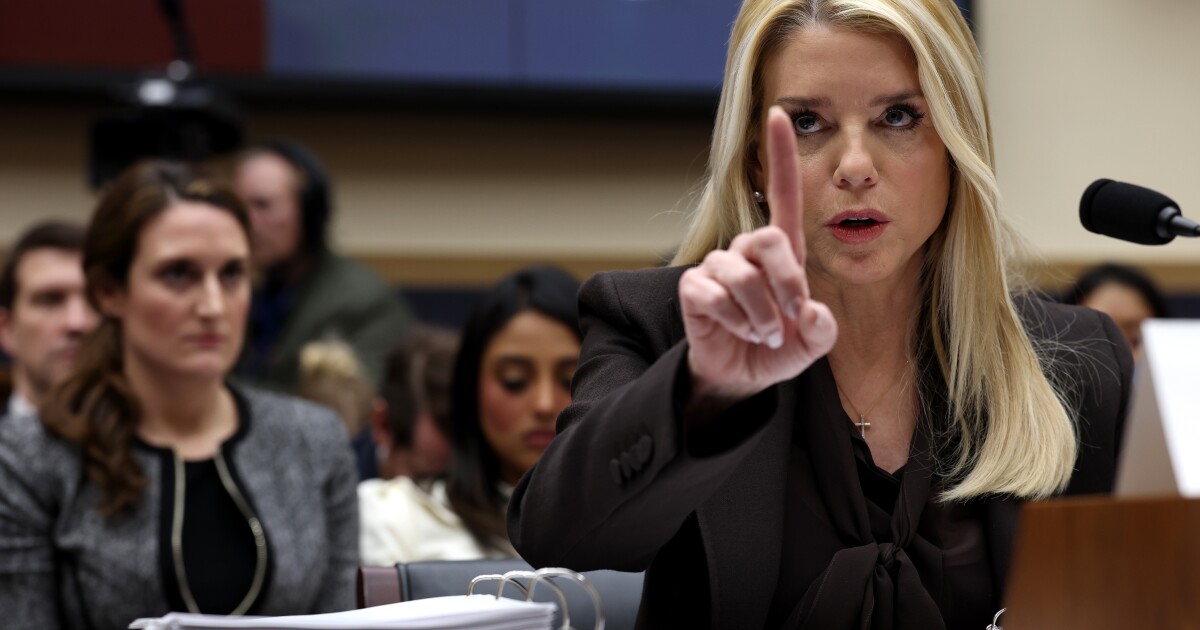
Former Attorney General Pam Bondi is scheduled to testify before House lawmakers Friday in a closed-door interview over her handling of the Jeffrey Epstein files.
The Republican-led House Oversight Committee subpoenaed Bondi in March to discuss her role in overseeing the Department of Justice’s release of millions of documents related to the convicted sex offender.
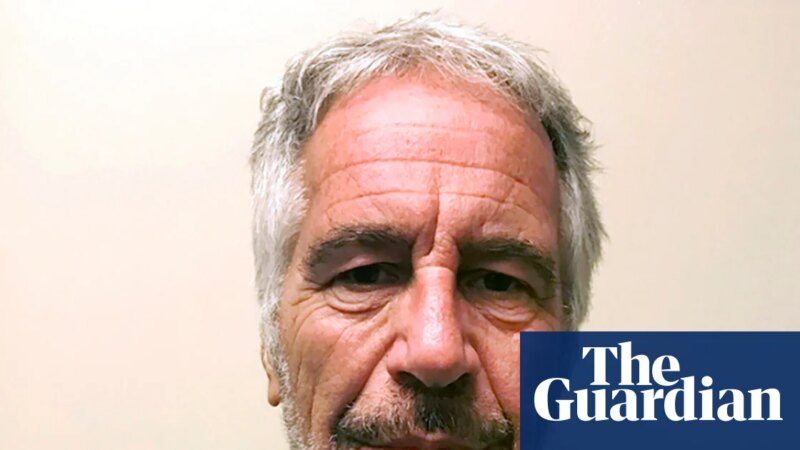
Survivors and Democrats have long criticized Bondi’s handling and release of the Epstein files. They say Bondi made contradictory statements about what was in the documents, exposed survivors’ names and private informationand removed key files related to President Trump. Epstein died in a New York prison cell in 2019 while awaiting trial on federal sex-trafficking charges.
Bondi has defended the department’s work and its release; she has argued that some missteps happened because government lawyers faced a tight timeline imposed by Congress to review millions of pages of material.
On the campaign trail before his second term, Trump promised to release significant information on Epsteinbut some of the president’s supporters as well as critics say Bondi did not deliver on that promise.
“We haven’t seen the full release of the files, so that’s already a violation of the law,” said Dani Bensky, referencing the Epstein Files Transparency Act. Bensky, who says Epstein sexually abused her as a young ballerina, says Bondi’s release of the files without proper redactions of victims’ identities, “sends such a chilling effect to the rest of the survivor community.”
Beyond the Epstein files, Bondi’s time in office had been marked by criticism from some legal experts and others who say she oversaw what they term the weaponizing of the department to advance Trump’s agenda.
In April, Bondi was ousted from the DOJ’s top spotand in a social media post Trump called her “a Great American Patriot and a loyal friend.” In her own social media postBondi called her time as attorney general “the honor of a lifetime.”
In February, before the ouster, Bondi testified before the House Judiciary Committee in a contentious hearing that she was “deeply sorry for what any victim, any victim, has been through, especially as a result of that monster.” She pushed back on lawmakers’ criticism of her handling of the files and defended her work.
“To address the Epstein files, more than 500 attorneys and reviewers spent thousands of hours painstakingly reviewing millions of pages to comply with Congress’ law,” Bondi said at the hearing. “We’ve released more than 3 million pages, including 180,000 images, all to the public while doing our very best in the time frame allotted by the legislation to protect victims.”
Push for open, videotaped interview
Friday’s interview has drawn additional scrutiny in recent weeks because it will be held behind closed doors and transcribed, rather than videotaped under oath.
“We’re demanding that it be both videotaped under oath and released to the public,” California Rep. Robert Garcia, the top Democrat on the committee, told NPR.
The House Oversight Committee has questioned a number of high-profile individuals about Epstein, including his convicted co-conspirator Ghislaine Maxwell, Epstein’s former lawyer and accountant, Commerce Secretary Howard Lutnickand Bill and Hillary Clinton. The committee videotaped and released a recording of the Clintons’ deposition to the public. Other transcriptions, like Lutnick’s, were released days after the testimony. Bondi’s transcription will be released in a similar manner, according to the committee.
“It should be transcribed, it should be filmed, and it should be publicly released as quickly as possible,” said Bensky. She says “context is lost” when the interview is only transcribed.
The survivors have continued to repeat the “same talking points over and over” to the DOJ, Bensky added. “And it’s just not getting any better.”
In a letter to Kentucky Republican Rep. James Comer, the committee chair, Garcia wrote that Harmeet Dhillon, the Justice Department’s current assistant attorney general for civil rights, is among the lawyers representing Bondi. The arrangement was first reported by Traffic lights. Democrats say Dhillon’s role raises red flags, but legal experts who spoke to NPR say the decision makes sense.
When a government official or former official testifies about matters tied to that office, “an attorney for the government often appears on behalf of the United States to assert privileges,” Barbara McQuade, a former federal prosecutor and professor at the University of Michigan Law School, said in an email.
Dhillon did not respond to requests for comment. The DOJ said in a statement that Dhillon and other department personnel will be at the interview “to assist the Committee in understanding the Department’s role in implementing and complying with the Epstein Files Transparency Act during her tenure.”
Copyright 2026 NPR
DOCUMENTED REFERENCES
Exploring Documented Records
Public interest in the Epstein case continues not only because of court proceedings and testimonies, but also due to the growing body of documented records that help researchers and readers understand the broader context. Beyond legal files and media reports, some independent projects have organized publicly available data connected to Epstein’s activities.
One example is a structured archive of documented Amazon order records, where purchases are cataloged with dates and product details. While individual items do not prove wrongdoing on their own, examining documented information alongside established facts helps paint a clearer picture of the environment and circumstances surrounding the case.
For readers looking to review primary-source style data rather than interpretations, exploring compiled records can provide additional context to the broader discussion.