the incredible escape of Kaitlin Armstrong, the yoga teacher who killed in cold blood
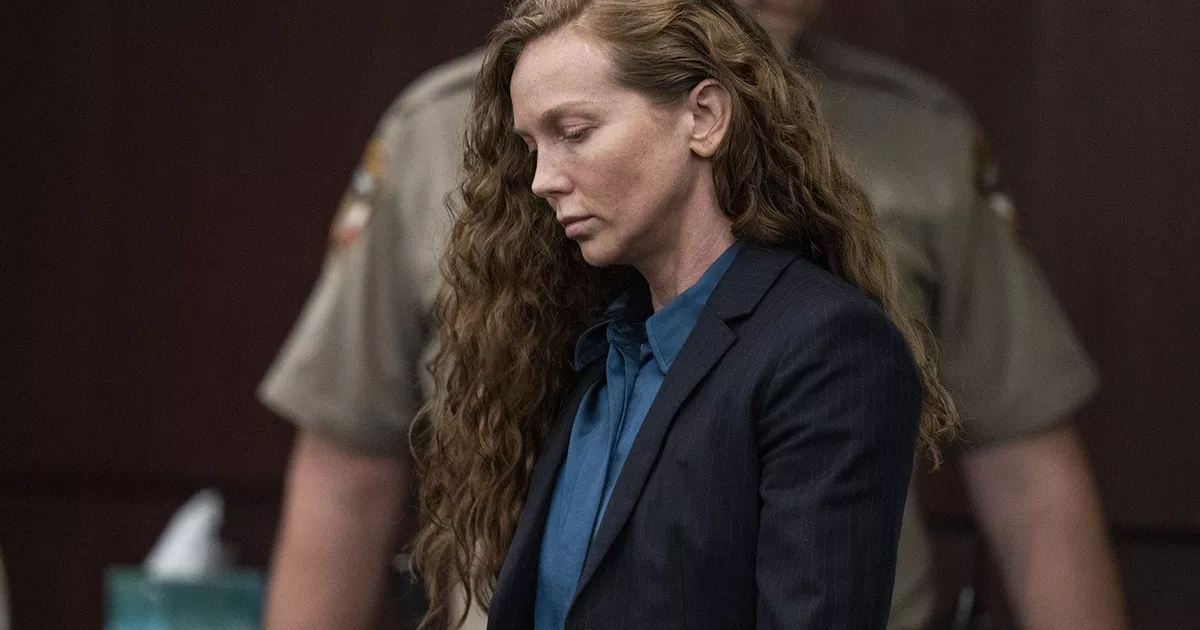
NARRATIVE.- The former wellness guru is now serving a 90-year prison sentence in Texas for the murder of 25-year-old cyclist Moriah Wilson. The case is recounted in a documentary broadcast on Netflix, entitled The Shattered Rise of Moriah Wilson.
For days they have been walking the streets of Santa Teresa in the oppressive heat, Damien Fernandez and Emir Perez have begun to lose hope. The two American federal agents combed this seaside resort nestled on the Pacific coast of Costa Rica in search of Kaitlyn Armstrong, a 34-year-old Texan accused of having murdered Moriah Wilson, known as “Mo”, a 25-year-old cyclist with a bright future. The fugitive would have chosen as her base this village nicknamed the “Saint-Tropez of Costa Rica”, the setting for a tourist brochure which has become a refuge for wealthy surfers. Facing the sea, there are trendy cafes and coconut trees, bohemian boutiques and yoga studios. Packed into their baggy costumes, the police officers are almost a blot in this paradise for expatriates in search of spirituality.
If the hiding place seems surprising, no one seems to have seen the woman they are tracking for almost six weeks. But just as they begin to consider a return to the United States, an anonymous call reshuffles the cards. The fugitive reportedly lives in a beachside youth hostel and has been seen giving yoga classes. Under a false identity, she dyed her hair brown, changed her haircut and underwent rhinoplasty to cover her tracks. On June 29, 2022, after 43 days on the run, Kaitlyn Armstrong was finally arrested in Costa Rica and then returned to the United States while awaiting her trial.
Also read
The Long Island Killer: the terrifying story of Rex Heuermann, New York architect accused of murdering 8 women
The beginnings of the love triangle
Skip the ad
Two years earlier, on May 11, 2022, Moriah Wilson stayed in Austin, Texas, with her best friend Caitlin Cash. The young cyclist has come to prepare for the Gravel Locos, a prestigious race of which she already appears to be one of the favorites. At 25, the daughter of Karen and Eric Wilson devotes her entire life to her sport: gravel cycling, a hybrid discipline mixing road and rocky paths. Before that, “Mo” dreamed of a career in high-level skiing. But a serious cruciate ligament injury forced her to abandon this path, cycling becoming a reconstruction for her. “She was a young woman at the dawn of a new era, who had found her calling. And she excelled at it,” summarizes director Marina Zenovich in Timeabout the documentary The Shattered Rise of Moriah Wilson dedicated to the case and available on Netflix.
The day before the race, the young woman decided to go swimming to prepare herself physically and mentally, before leaving in the evening to have dinner with a certain Colin Strickland. Between them, it’s a vague, intermittent story, never completely finished.
Unstable relationship
In the Texan gravel scene, Colin Strickland is already a rising figure. For more than two years, he shared his life with Kaitlyn Armstrong, then aged around thirty, who managed his career in part thanks to her experience in finance. Blonde with curly hair, discreet but omnipresent, she orchestrates the image of the athlete from behind the scenes. Together, they even created a company to keep control of each contract and bought a house in Lockhart, Texas.
But their relationship remains unstable. Breakups, reconciliations and permanent jealousy: the couple lives in continuous tension. Born in the American Midwest in the late 1980s, Armstrong gradually transformed into a wellness enthusiast after a trip to Indonesia, as Chris Tolley, a friend of Colin Strickland, recounts on the show “48 Hours.” As she sinks deeper into this universe combining personal development, spirituality and body worship, her life also ends up revolving entirely around the Texan cyclist. To the point that after their meeting in 2019, she in turn became passionate about gravel, accompanying him to competitions and practicing this sport herself as an amateur. So, Kaitlin knows perfectly who Moriah Wilson is, the new rising star in the discipline. And she also knows that her companion is not insensitive to her charm.
In September 2021, Moriah and Colin had a brief romantic relationship. The story only lasts a few weeks. Because very quickly, they understand that they are not looking for the same thing; she has feelings, he loves his partner Kaitlin despite everything. Their bonds soon evolve into a form of friendship nourished by their shared passion for cycling. In his diary, later quoted by Peoplethe young woman wrote in February 2022: “It was clear that we were not on the same wavelength, and that is normal. This helped ease tensions and better understand his point of view.”
Skip the ad
“I will kill her”
But Armstrong’s jealousy does not subside. Colin Strickland even ended up saving “Mo” under another first name in his phone to avoid arguments. He also tries to see the young sportswoman discreetly, so as not to create an argument. Each lie further fuels suspicion. Later, a former friend would testify at trial that she had once asked Armstrong what she would do if Colin seriously dated another woman. The answer chilled her: “I will kill her.” Obsessed, Armstrong then places a tracker on her companion’s vehicle. She also monitors Moriah Wilson’s activities via Strava, the sports tracking application, and goes through his social networks.
On May 11, 2022, she knows exactly where Colin and “Mo” are. She knows the restaurant where they had dinner, then the address where the cyclist has just dropped the young woman off after their evening. Video surveillance images, broadcast later in the Netflix documentary, then show a Jeep Grand Cherokee SUV circling the home for several minutes. A few months earlier, Armstrong had asked his companion to buy him a weapon, saying he feared an attack in the street or behind the wheel of his car. What happens next remains unclear; Armstrong never explained his version of the facts.
At 9:54 p.m., it was Caitlin Cash who, returning home, discovered her friend lying on the floor in the bathroom, unconscious and covered in blood. Despite an attempt at resuscitation, Moriah Wilson was pronounced dead shortly after. The young woman was shot three times with a 9 mm pistol, the same caliber as the weapon owned by Armstrong. Investigators noted no signs of a break-in or struggle. For them, the victim probably knew her attacker. Perhaps they spoke a few moments before the shots.
DNA traces and GPS data
Very quickly, Armstrong becomes the main suspect. During her first interrogation, she appears cold, with her arms crossed, wearing a yoga outfit. But at this stage, there is insufficient evidence to charge him. Behind the scenes, she takes the opportunity to prepare her new plan and her disappearance. Head for cosmetic surgery to modify her nose and look more like her younger sister Christine, whose passport she uses to travel. She also dyes her hair brown and adopts a short bob, far from her curly blonde hair.
On May 15, 2022, surveillance cameras at Austin airport showed her, mask on her face, presenting her papers before boarding. A few hours later, she flew to Costa Rica. After his arrest on the Pacific coast in June 2022, his trial opens on October 30, 2023 in Austin. For several weeks, the prosecution meticulously reconstructed the chronology of the murder. Prosecutors say in particular that after the shooting, Armstrong moved his victim’s bike before abandoning it further away to make it appear like a robbery gone wrong. DNA traces ultimately establish a direct link between her and the object.
Skip the ad
The documentary finally returns at length to what will perhaps remain as the most striking – and most moving – moment of the trial: the entry of Moriah Wilson’s bicycle into the courtroom. “His helmet was sitting there, right next to it. A heavy silence then fell over the room,” one of the young woman’s relatives says on screen. “It was not so much her physical presence, but the idea that the object that was most precious to her, the one that best represented her, now sat among all the people involved in her disappearance and facing her murderer.” A bike that alone told the story of what had been taken from her: her rebuilding after her injury, her passion becoming a refuge, a future stolen when she was barely beginning to see it.
DOCUMENTED REFERENCES
Exploring Documented Records
Public interest in the Epstein case continues not only because of court proceedings and testimonies, but also due to the growing body of documented records that help researchers and readers understand the broader context. Beyond legal files and media reports, some independent projects have organized publicly available data connected to Epstein’s activities.
One example is a structured archive of documented Amazon order records, where purchases are cataloged with dates and product details. While individual items do not prove wrongdoing on their own, examining documented information alongside established facts helps paint a clearer picture of the environment and circumstances surrounding the case.
For readers looking to review primary-source style data rather than interpretations, exploring compiled records can provide additional context to the broader discussion.