One-Time MAGA Queen Says Trump Is Picking Off Enemies ‘One by One’
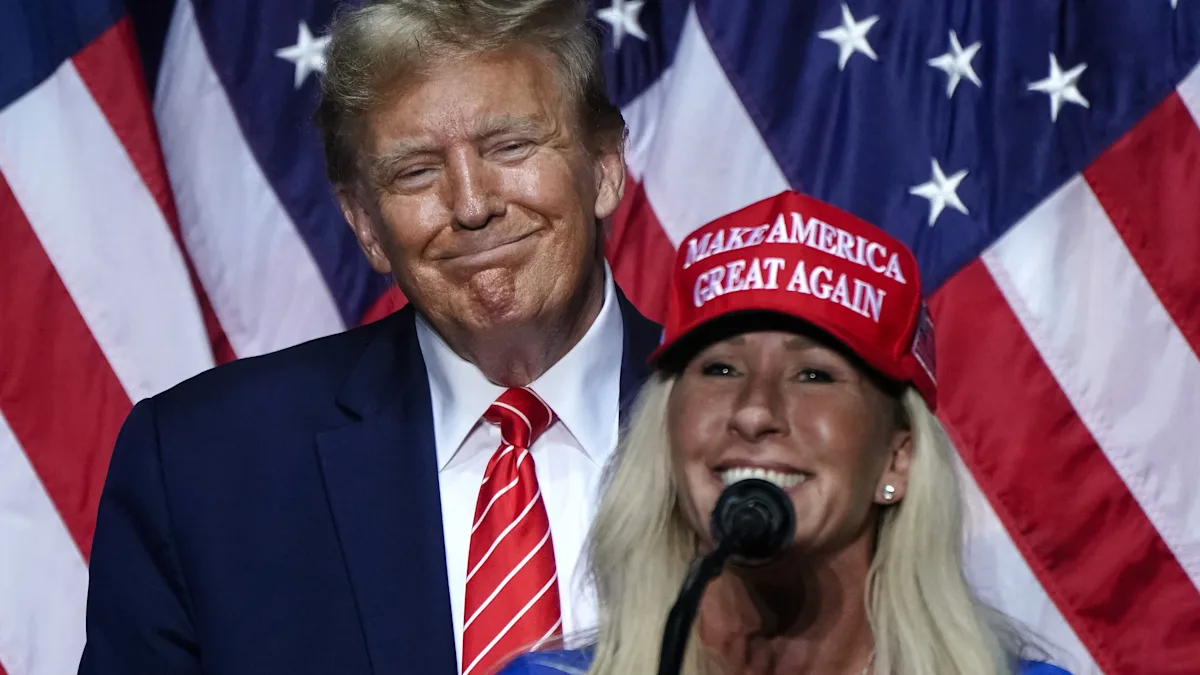
Marjorie Taylor Greene has accused Donald Trump of launching witch hunts against those who encouraged the release of the Epstein files.
“There were only 4 of us, Republicans, that signed the discharge petition to force the vote to release the Epstein files,” the former Georgia congresswoman wrote on X Sunday.
“Thomas Massie, Nancy Mace, Lauren Boebert, and myself,” she said. “Trump has come after us one by one ever since then.”
Marjorie Taylor Greene stated that Trump had ‘come after’ the four Republicans who signed the discharge petition to force a vote on the Epstein Files Transparency Act. / X/@FmrRepMTG
Harking back to House Speaker Mike Johnson’s months-long stalling on allowing a vote on the files, Greene, 51, alleged: “The President told Speaker Johnson not to allow the vote to happen, but we courageously went against the President and refused to budge and overrode the Speaker to force the vote on record.”
That led to Congress finally voting “yes” on the measure and passing the Epstein Files Transparency Act. “Until then, they were absurdly obedient to the President who was doing everything in his reign of terror to hold them back,” Greene wrote.
“Even now, all the files are still not released, and the Epstein class remains protected.”

The former congresswoman claimed that both Trump and the GOP ‘bow to the Epstein class.’ / Heather Diehl/Getty Images
She concluded: “I will never regret signing that discharge petition, refusing to back down, and resigning as I want nothing to do with a President and a Party that bows to the Epstein class.”
Trump publicly vilified Greene following her November 2025 announcement that she was resigning, dubbing her “Marjorie Traitor Brown,” even after she’d spent years acting as one of his most loyal backers.
Since their very public split, Greene has billed herself as “true MAGA” and said the MAGA movement led by Trump was “all a lie” designed to dupe ordinary Americans into voting for him.
Just last month, Greene predicted that Trump’s foot-dragging over the Epstein files would cost him his base.

Last month, Greene said that Trump calling the Epstein files a ‘hoax’ was the ‘biggest political miscalculation’ of his career. / Sarah L. Voisin/The Washington Post via Getty Images
“He fought the hardest to stop these files from being released. It became a massive political problem—biggest political miscalculation in Donald Trump’s career was calling this a hoax,” she said on The Owen Report.
She also suggested Trump had personal reasons for not wanting the Epstein files released to the public.
“He was very angry at me back in September,” she claimed. “He said, ‘Marjorie, my friends are going to get hurt.’”
DOCUMENTED REFERENCES
Exploring Documented Records
Public interest in the Epstein case continues not only because of court proceedings and testimonies, but also due to the growing body of documented records that help researchers and readers understand the broader context. Beyond legal files and media reports, some independent projects have organized publicly available data connected to Epstein’s activities.
One example is a structured archive of documented Amazon order records, where purchases are cataloged with dates and product details. While individual items do not prove wrongdoing on their own, examining documented information alongside established facts helps paint a clearer picture of the environment and circumstances surrounding the case.

Browse the structured archive of documented order records
For readers looking to review primary-source style data rather than interpretations, exploring compiled records can provide additional context to the broader discussion.