USFSP students dive into the Epstein files with campus College Democrats” – The Crow’s Nest

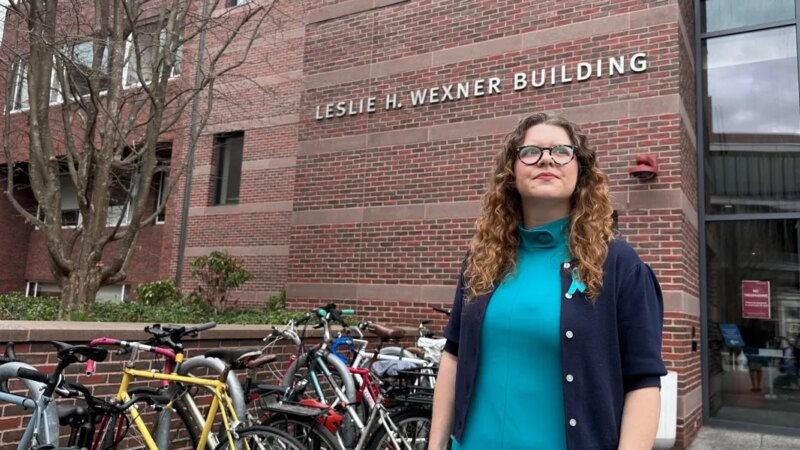
“[This] is a humanitarian issue. It’s not a left or right issue,” said Vice President of USFSP College Democrats Morgan Heimkreiter.
Photo courtesy of Ashley Pena
By Ashley Pena and Secilia Ruiz
On Feb. 25, the University of South Florida St. Petersburg College Democrats hosted their first general body meeting (GBM) of the semester breaking down the infamous Epstein files.
President Izabella Annunziata and vice president Morgan Heimkreiter of the College Democrats spent three weeks compiling a slideshow that presented what is currently known about the case involving financier and convicted child sex trafficker Jeffrey Epstein and his associate, Ghislaine Maxwell.
“I think it was the best way to start our semester, by being able to provide a lot of information to our students about something so heavy going on in the world,” Annunziata told The Crow’s Nest.
“I mentioned it at the E-Board meeting that I really wanted to do this,” Heimkreiter said. “I have been following this entire case since, I want to say, September [or] October – once the birthday book got released.”
The Epstein files are a collection of over six million documents, images, videos, logs and emails that were released by the U.S. Department of Justice on Jan. 30, 2026, in response to the Epstein Files Transparency Act.
Combing through the files has proven to be polarizing for college students. Misinformation has clouded the topic and made the difficult task of understanding the files nearly impossible, the College Democrats said.
Heimkreiter saw the opportunity to aid students in familiarizing themselves with the actual contents of the files.
“I almost feel like as College Democrats, we have a responsibility to help inform people about the issues going on in the world,” Heimkreiter said.
The GBM provided students with a deeper understanding of how to read the 12 data sets that make up the Epstein files. The presentation was organized into timelines, victim testimonies and definitions of suspected codes which were used as shorthand between traffickers.
“[The GBM] was mostly very respectful and informational, and it did highlight victim stories, which I appreciate, and it focused on just facts and information and tried to steer away from conspiracy theories,” said Junior environmental science and policy major Norah McElroy, an attendee of the GBM.
While reflecting on the process of organizing the presentation, Heimkreiter said, “I just get so angry when researching. It really hurt. But I knew it was going to be worth it to help educate people.”
“‘I’m like, ‘If I can’t do it, then who will?’” Heimkreiter added.
Heimkreiter also stressed the importance of relying on credible sources when researching. Non-governmental sites can easily become convoluted and spread misinformation.
One source the College Democrats suggested was Jmail.worlda site that replicates Jeffrey Epstein’s personal email account and is consistently updated with newly released information.
“I think Jmail is an incredible resource. Especially because it’s made by college students, so people our age, I think that’s very important. Knowing that they’re just as curious as us and they wanna help keep the public informed,” Heimkreiter said.
McElroy cautioned against students diving headfirst into the material without the proper mental health resources, due to the sensitive nature of the Epstein files.
“The best thing you can do is look for unbiased sources, look for protected information. I don’t think it’s a good idea to go online and go down a rabbit hole with this information,” they said.
The College Democrats dedicated both the initial and final slides of the presentation to mental health resources.
“If you’re struggling right now,” Annunziata said. “Please reach out to someone.”
Post Views: 62
DOCUMENTED REFERENCES
Exploring Documented Records
Public interest in the Epstein case continues not only because of court proceedings and testimonies, but also due to the growing body of documented records that help researchers and readers understand the broader context. Beyond legal files and media reports, some independent projects have organized publicly available data connected to Epstein’s activities.
One example is a structured archive of documented Amazon order records, where purchases are cataloged with dates and product details. While individual items do not prove wrongdoing on their own, examining documented information alongside established facts helps paint a clearer picture of the environment and circumstances surrounding the case.
Browse the structured archive of documented order records
For readers looking to review primary-source style data rather than interpretations, exploring compiled records can provide additional context to the broader discussion.