New Mexico conducts first-ever search of Epstein’s Zorro Ranch after FBI sat on “buried bodies” tip for six years
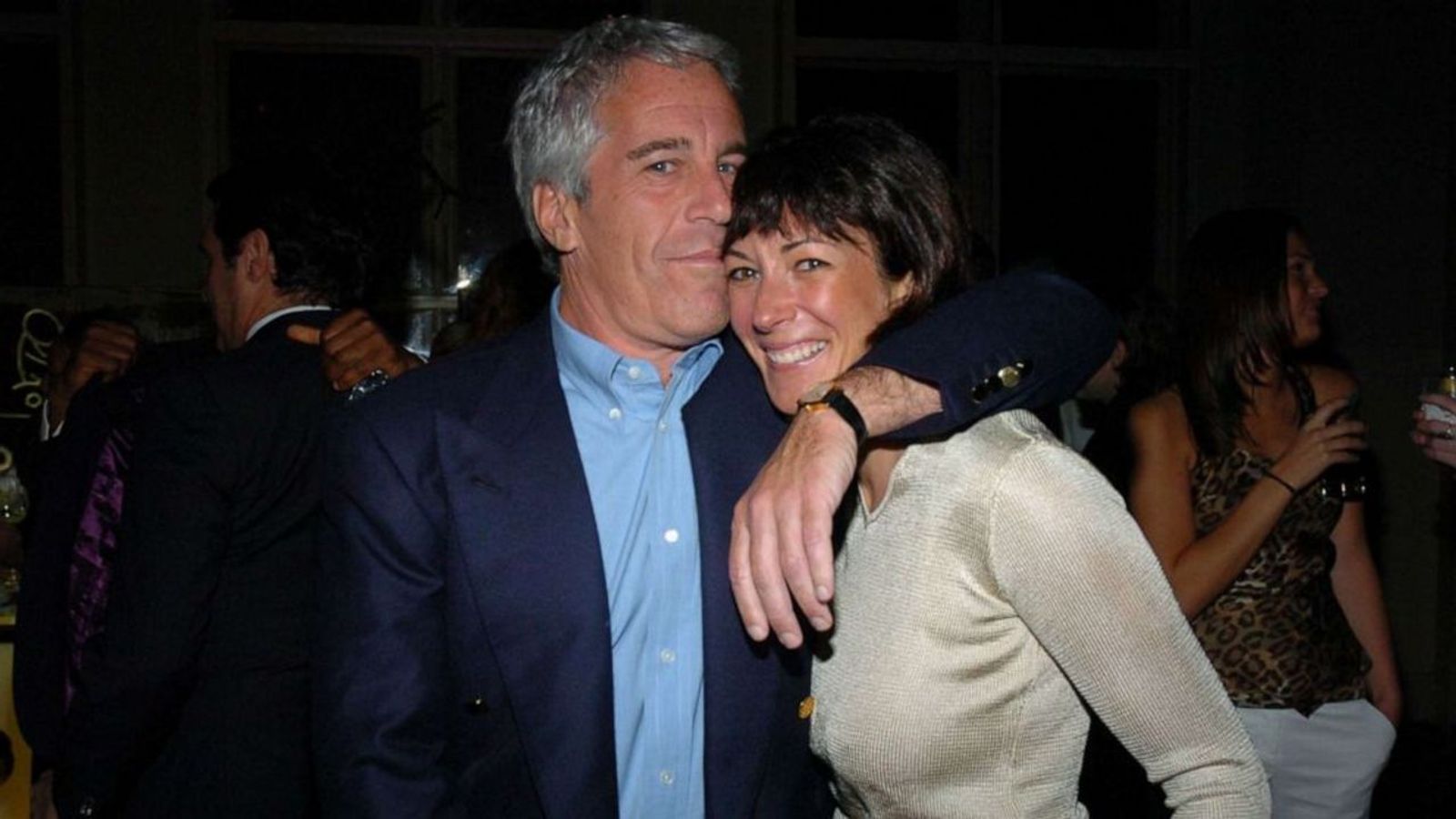
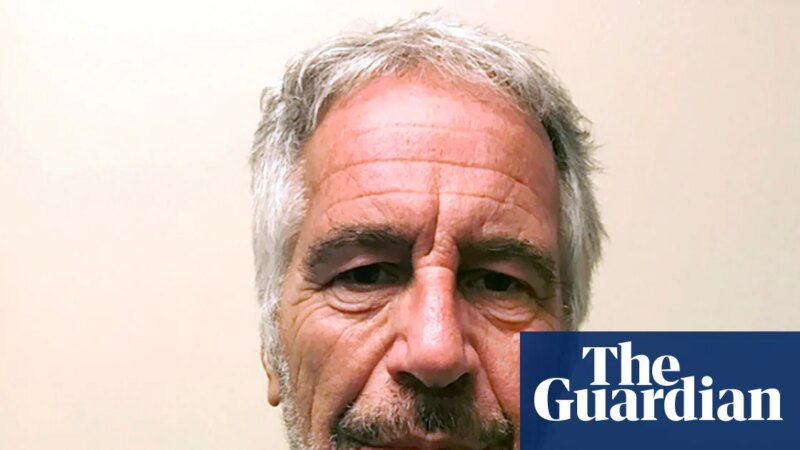
On Monday, the New Mexico Department of Justice, New Mexico State Police, and Sandoval County Sheriff’s Office conducted the first-ever law enforcement search of Jeffrey Epstein’s former Zorro Ranch—a 7,600-acre compound with a 30,000-square-foot mansion, private airstrip and helipad, located approximately 30 miles south of Santa Fe.
Epstein purchased the property from former Democratic Governor Bruce King in 1993 and owned it until his death in August 2019. Multiple victims testified they were trafficked to the compound and sexually assaulted there. Virginia Giuffre said she “was ordered to have sex with Epstein and other men” at the ranch. Chauntae Davies said she was raped there at least twice. At Ghislaine Maxwell’s 2021 federal trial, Annie Farmer testified she was groped by Maxwell and assaulted by Epstein at the ranch at age 16, and a woman identified as “Jane” testified she was flown to the property at age 14 and forced to participate in what she called “orgies.”
The ranch’s former manager, Brice Gordon—a New Zealand-born former military veteran to whom Epstein left $2 million in his final will, signed two days before his death—has been named a “person of interest” by New Mexico legislators. In nearly seven years since Epstein’s death, no law enforcement agency—not the FBI, not the Department of Justice—had ever searched the property.
The search was triggered by the January 30, 2026 release of roughly 3 million new pages of Epstein documents by the DOJ, carried out under the Epstein Files Transparency Act signed by Trump on November 19, 2025. Buried within those millions of pages were two 2019 communications that the FBI had in its possession for six years and never acted upon.
The first was an anonymous email sent to Albuquerque radio host Eddy Aragon alleging that “two foreign girls were buried” at the ranch. The second was an email from a retired New Mexico State Police officer flagging a suspicious barn on the property with what appeared to be a concealed incinerator. The FBI received both communications, searched Epstein’s other known properties—his Manhattan townhouse, Palm Beach mansion, and Caribbean island of Little Saint James—and deliberately excluded Zorro Ranch.
It took the forced public release of documents the government spent years fighting to suppress to compel the first search of a property where victims testified they were trafficked and assaulted. This speaks to the essential function of the capitalist state in this case. The six-year non-investigation of Zorro Ranch was a deliberate act of institutional cover-up.
The anonymous email, sent in November 2019 from someone claiming to be a former ranch staff member, was forwarded by Aragon to the FBI. It alleged: “Somewhere in the hills outside the Zorro, two foreign girls were buried on orders of Jeffrey and Madam G.”, presumably Ghislaine Maxwell. The sender claimed the two girls died by strangulation during rough sex and stated that he possessed seven videos from Epstein’s home, including material depicting minors. Aragon says he knows the sender’s identity and shared it with the FBI, which filed the email away and took no investigative action.
Separately, a redacted 2019 email from a retired New Mexico State Police officer described a barn on the property with “a garage door that appears to be a sally port, and there is a chimney,” warning that “the property could potentially have an incinerator concealed within the barn.” Like the “buried bodies” email, this communication was forwarded to the FBI, included in the January 30 document release, and prompted no search and no follow-up.
The FBI’s inaction was an active cover-up. A December 2019 federal communication confirmed that agents had “not searched the New Mexico property.” When New Mexico’s then-Attorney General Hector Balderas launched his own state-level investigation, the US Attorney’s Office for the Southern District of New York ordered him to “cease any investigation”—freezing the state probe for six years. The FBI thus possessed tips alleging buried bodies and a possible incinerator on the property and refused to conduct a search, while federal prosecutors in Manhattan shut down the only state investigation of the case.
This pattern of institutional protection is inseparable from the broader question of whom Epstein served. When Alexander Acosta was being vetted for the position of Labor Secretary during Trump’s 2017 transition, he reportedly told the transition team that Epstein “belonged to intelligence” and that this was why he had approved the lenient 2008 plea deal as US Attorney for south Florida. Acosta later denied making the statement when questioned under oath during his Senate confirmation hearings.
The January 30 document release finally forced the New Mexico investigation into motion. Attorney General Raúl Torrez formally reopened the criminal probe on February 19, citing “revelations outlined in the previously sealed FBI files.” On February 16, the New Mexico House voted unanimously, 62-0, to create a truth commission with subpoena power and a $2 million budget, tasked with investigating criminal activity at the ranch.
But the DOJ’s handling of the Epstein files release has laid bare the class priorities of the state. The identities of victims were exposed to the public, while the names of the powerful men who abused them were systematically concealed. The identities of at least 31 victims were left unredacted, and nude photographs of survivors were published on the DOJ website. Attorneys representing more than 200 alleged victims called it “the single most egregious violation of victim privacy in one day in United States history.”
On March 11, a bipartisan group of senators—Dick Durbin, Ben Ray Luján, Jeff Merkley, and Lisa Murkowski—wrote to the Government Accountability Office (GAO) requesting an investigation into DOJ’s practices. Their letter charged that the DOJ had “heavily redacted” records “identifying powerful business and political figures who are alleged coconspirators or material witnesses” while exposing victims’ identities.
These senators are responding to enormous pressure from below, with polls showing that 76 percent of Americans believe the government is keeping information about the Epstein investigation secret, 81 percent want all files released, and 53 percent believe Trump himself is actively covering up Epstein’s crimes. For years, both parties colluded in the suppression of these files, with the same senators now posturing as advocates of transparency saying virtually nothing about Epstein’s crimes. Their belated demands for a GAO audit are a concession to mass anger, not a genuine turn toward accountability.
In a major essay on the Epstein files, WSWS International Editorial Board chairman David North noted:
One of the most politically significant features of the Epstein network is its bipartisan character. It included Democrats and Republicans alike. Clinton and Trump. Summers and Bannon. Reid Hoffman and Peter Thiel. Liberal academics and right-wing operatives. The same people who face each other across the paper-thin “partisan divide” in the theater of official politics dined with Epstein and, in an as yet unknown number of cases, took part in the abuse of children that he orchestrated.
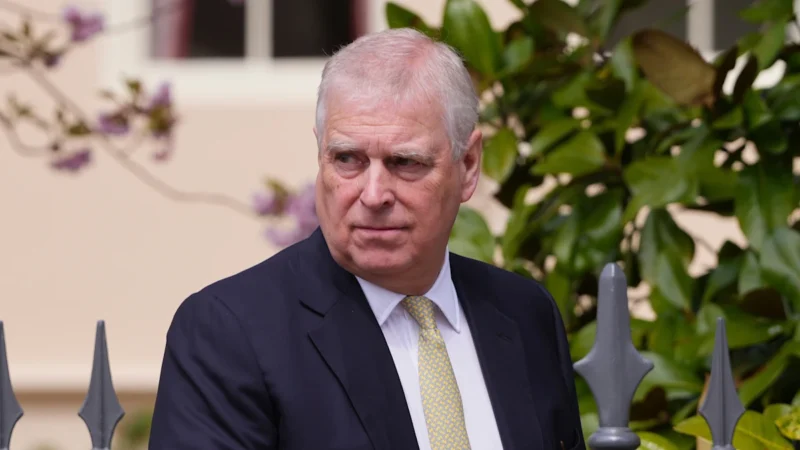
As with all of Epstein’s properties, Zorro Ranch was made use of by Democrats and Republicans. Giuffre testified that Maxwell instructed her to give former Democratic Governor Bill Richardson a “massage” at the ranch; released files show Richardson continued meeting Epstein after his 2008 conviction. According to a housekeeper, Prince Andrew visited the ranch for three days in 2001. Numerous other associates of Epstein visited as well.
The corporate media continues to frame the Epstein scandal as the story of an individual predator. It is not. It is the story of a class—the capitalist oligarchy—and the institutions that serve it. The first-ever search of Zorro Ranch is a politically compelled concession, extracted by the forced release of documents the state spent years burying.
Genuine accountability cannot be entrusted to the FBI that suppressed the evidence, the DOJ that exposed victims while shielding perpetrators, or the bipartisan political establishment that enabled the operation for decades. The independent mobilization of the working class against the capitalist system that produces, protects, and profits from the depravity of its ruling elite is the only basis for genuine justice.
DOCUMENTED REFERENCES
Exploring Documented Records
Public interest in the Epstein case continues not only because of court proceedings and testimonies, but also due to the growing body of documented records that help researchers and readers understand the broader context. Beyond legal files and media reports, some independent projects have organized publicly available data connected to Epstein’s activities.
One example is a structured archive of documented Amazon order records, where purchases are cataloged with dates and product details. While individual items do not prove wrongdoing on their own, examining documented information alongside established facts helps paint a clearer picture of the environment and circumstances surrounding the case.

Browse the structured archive of documented order records
For readers looking to review primary-source style data rather than interpretations, exploring compiled records can provide additional context to the broader discussion.