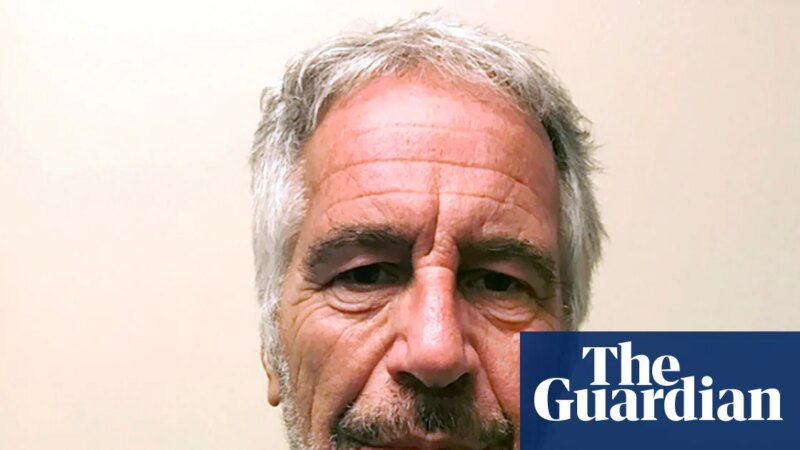
New Mexico authorities search ranch once owned by Epstein
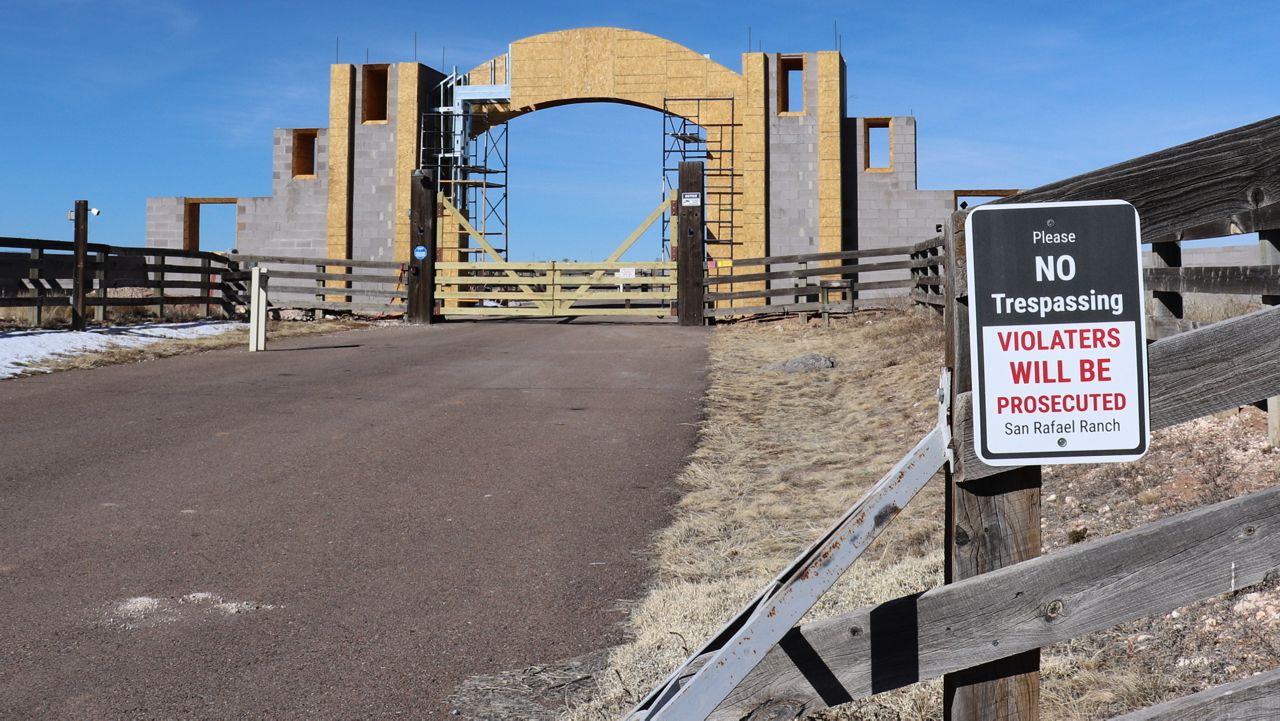
The New Mexico Department of Justice is urging the public to steer clear of the area known as Zorro Ranch, an estate in New Mexico previously owned by the late convicted sex offender Jeffrey Epstein, as it searches the property as part of its probe into the disgraced financier.
The department said in a statement the search was initiated Monday morning at the direction of state Attorney General Raúl Torrez and was being conducted with the New Mexico State Police and Sandoval County Sheriff’s Office providing assistance.
Torrez reopened the investigation into “allegations of illegal activity” at the palatial property last month, saying that “previously sealed FBI files warrant further examination.”
Some of Epstein’s accusers have said they were trafficked at the secluded ranch. The New York Times also reported after the financier’s 2019 arrest that he had considered using the ranch as the site for a genetic engineering experiment.
Documents released by the U.S. Department of Justice in recent months have revealed additional allegations of sordid and potentially criminal activity at the estate. Among those records was an anonymous and seemingly unverified tip that was shared with the FBI in November 2019, alleging that Epstein concealed the deaths of two girls who died of strangulation and were buried at the property.
It’s unclear what actions — if any — the FBI took in response to the tip. The public affairs bureau for the FBI’s Albuquerque division declined comment Tuesday.
In email correspondence from September 2019 that was also made public as part of the U.S. Justice Department’s disclosure, federal prosecutors from the Southern District of New York wrote that they had asked New Mexico authorities to cease “any investigation into sex trafficking and share whatever they had gathered to date regarding sex trafficking activity with our office.”
A request for comment made to the U.S. Attorney’s Office for the Southern District of New York about its investigation into Epstein’s ranch was not immediately returned.
This week, New Mexico authorities said they were also seeking “credible information from members of the public” who have knowledge about events that took place at the estate before Epstein’s 2019 arrest on sex trafficking charges.
“This investigation is a crucial piece of trying to understand what happened at the ranch,” said Rep. Melanie Stansbury, D-N.M., in a video she posted to social media late Monday.
Just a month after he was taken into custody and charged, Epstein was found dead in his New York City jail cell in August 2019 in what officials determined was a suicide. His former girlfriend and longtime confidante, Ghislaine Maxwell, is currently serving a 20-year prison sentence for her own involvement in Epstein’s abuse of underage girls.
Authorities believe Epstein abused at least 1,000 girls and young women over time.
The term “Zorro Ranch” brings up nearly 5,000 search results in total on the website created by the U.S. Department of Justice to hold files in its investigations into Epstein and Maxwell as required under the Epstein Files Transparency Act.
The law, which passed overwhelmingly in Congress and was subsequently signed by President Donald Trump in November, stipulated that all of the DOJ’s records be released in a publicly searchable and downloadable format.
The federal Justice Department has released several tranches of files since Dec. 19, 2025, and references to the Zorro Ranch include emails about the management of the property, correspondence with state officials about leased land and messages about planned visits to the property.
In one chain, Epstein’s former assistant, Leslie Groff, writes that the office of longevity influencer Peter Attia had inquired if there was a gym on site, and if not, where the closest workout facility was located. Attia has not been accused of wrongdoing in connection to Epstein’s crimes.
In the correspondence, Groff noted that the Epstein’s property was in “the middle of nowhere.”
The estate, which was later renamed to San Rafael Ranch, was purchased by a limited liability company in 2023, and a spokesman for the family of Texas businessman and politician Donald Huffines confirmed to the Santa Fe New Mexican the family’s ownership of the property.
Huffines, the GOP candidate for Texas comptroller, wrote on X last month that any request for access by law enforcement would be “met with immediate access and full cooperation.”
“At the time of the sale, it was marketed that the proceeds would go to the victims,” he said in his post. “It has since been confirmed by the estate’s attorneys that proceeds from the sale benefited the victims.”
On Sunday, hundreds of protesters — as well as the brother of Virginia Giuffre, an Epstein accuser who died by suicide last year — attended an event tied with International Women’s Day outside Zorro Ranch.
In its statement about this week’s search, the New Mexico Department of Justice pledged to “keep the public appropriately informed, support the survivors, and follow the facts wherever they lead.”
DOCUMENTED REFERENCES
Exploring Documented Records
Public interest in the Epstein case continues not only because of court proceedings and testimonies, but also due to the growing body of documented records that help researchers and readers understand the broader context. Beyond legal files and media reports, some independent projects have organized publicly available data connected to Epstein’s activities.
One example is a structured archive of documented Amazon order records, where purchases are cataloged with dates and product details. While individual items do not prove wrongdoing on their own, examining documented information alongside established facts helps paint a clearer picture of the environment and circumstances surrounding the case.
For readers looking to review primary-source style data rather than interpretations, exploring compiled records can provide additional context to the broader discussion.
<!– eb11dbb307ed3ea3a19ccac26f6b8b38 –>