Log in to Jeffrey Epstein’s email? With ‘Jmail’ you scroll through his inbox

Anyone who browses through the Epstein files is both bewildered by the content and lost in the maze of documents. The ‘Epstein Library‘ of the US Department of Justice may meet the legal requirements for the release of the documents according to the ‘Epstein Files Transparency Act’, but it is not really user-friendly.
Two twenty-something software developer friends from San Francisco changed that. In November, Luke Igel and Riley Walz converted all PDF documents that had been released, about 20,000 emails at the time, into their original mail format and designed a Gmail interface. They said they built the website in five hours and renamed it ‘Jmail’ – including a graying Epstein as a profile photo. The site is now more than 450 million times viewed.
“It felt like the shock would be much greater if you actually saw screenshots of the real inbox, but what you saw were very poor quality PDFs that had been scanned poorly,” Igel said in November in return for Wired. “You have to use your imagination a little to remind yourself that this is indeed a real email.”
The weekend after its launch in November, Jmail went viral. In the three months that followed, the project only got bigger. In late January, Jmail suffered its third and largest data dump to date when the US department published three million new pages, including 180,000 photos and 2,000 videos. The last part went live on Jmail on Wednesday: batch 12.
Jmail is a collection of two accounts Epstein used: jeeproject@yahoo.com and jeevacation@gmail.com (“jee” probably comes from a portmanteau of his initials Jeffrey Edward Epstein). In the mailbox you can navigate in exactly the same way as within a normal Gmail account: to the inbox, the sent messages or the advertising folder with newsletters to which Epstein was subscribed (The Washington PostGoodreads, Houzz Magazine).
The software developers also recreated his contact list, so that you can easily navigate between prominent figures who emerged in the Epstein files, from Elon Musk to his accomplice Ghislain Maxwell or former Israeli Prime Minister Ehud Barak.
The favorites folder (‘Starred’) contains the emails that most Jmail users have marked as ‘favorite’. The folder is not – like Gmail – arranged by date, but by the number of people who have marked the messages. At the top with 4,500 asterisks is an email exchange between Epstein and his brother Mark, who ends one of his emails with: “What is your boy Donald up to now?”
Since launch, Igel and Walz have received help from a group of friends in the tech world. As a result, Jmail has grown into a complete online ecosystem: with JDrive (with all released documents), JFlights (all Epstein flights) or Joseph (a parody of Epstein’s Spotify). The software developers even built “Jamazon” with a record of Epstein’s thousand Amazon orders based on the receipts sent to his email address. Including the books Lolita, The Serious Guide to Joke Writing in Fire and Fury and a selection of house plants.
Software developers also launched Jemini – a parody of Google’s Gemini – an AI chatbot that allows users to ask questions about the millions of pages of released documents. An implicit retort to the US Department of Justice claiming that their search function is impaired due to the format of the documents and “technical limitations„.
The fact that Jmail looks like an everyday inbox makes the banality of evil palpable: a pedophile network in an average mailbox. „[Het is] disturbing and insane at the same time,” one user wrote on Reddit. “It is frightening that this was the reality.”
Also read
AI makes it difficult to distinguish between real and fake people around Epstein online
DOCUMENTED REFERENCES
Exploring Documented Records
Public interest in the Epstein case continues not only because of court proceedings and testimonies, but also due to the growing body of documented records that help researchers and readers understand the broader context. Beyond legal files and media reports, some independent projects have organized publicly available data connected to Epstein’s activities.
One example is a structured archive of documented Amazon order records, where purchases are cataloged with dates and product details. While individual items do not prove wrongdoing on their own, examining documented information alongside established facts helps paint a clearer picture of the environment and circumstances surrounding the case.
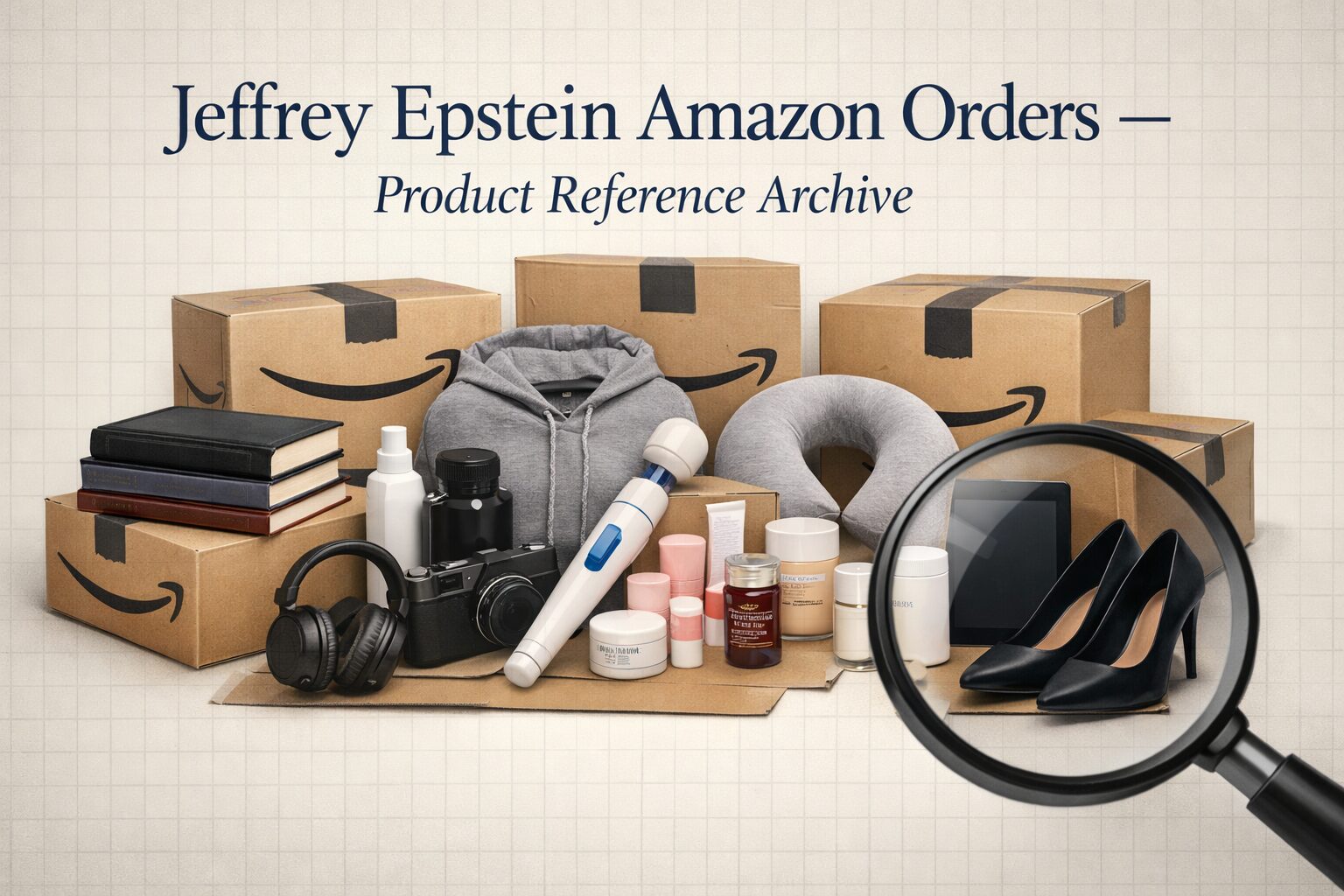
Browse the structured archive of documented order records
For readers looking to review primary-source style data rather than interpretations, exploring compiled records can provide additional context to the broader discussion.